

How we tested stand mixers
We evaluated stand mixers based on torque, bowl geometry, and attachment ecosystems. The goal is to match mechanical design to specific baking tasks, distinguishing between versatile all-rounders and specialized heavy-duty units.
Top stand mixer picks
Best overall: KitchenAid Artisan Plus
The KitchenAid Artisan Plus is the benchmark for home bakers requiring versatility. Its planetary mixing action—where the beater rotates on its own axis while orbiting the bowl—ensures consistent incorporation of ingredients from delicate meringues to stiff cookie dough. The included Flex Edge beater scrapes the bowl sides, reducing manual intervention. It is not designed for high-volume bread baking but excels in general-purpose tasks.

As an Amazon Associate, we may earn from qualifying purchases.
Best for bread: Bosch Universal Plus
For frequent bread bakers, the Bosch Universal Plus is superior due to its bottom-drive mechanism. Unlike traditional top-drive mixers, it uses a flexible dough hook that presses against the bowl walls, mimicking hand kneading. This design prevents motor strain when working with stiff bagel or pizza dough, allowing for extended kneading without overheating. It lacks the sleek aesthetic of a KitchenAid but offers unmatched durability for heavy doughs.

As an Amazon Associate, we may earn from qualifying purchases.
Best budget: Beautiful by Drew Barrymore
The Beautiful by Drew Barrymore offers solid performance for occasional bakers at a lower price point. It handles standard cake and cookie batters effectively but lacks the torque for heavy doughs. Its lightweight design and accessible price make it a practical entry point for those who do not require commercial-grade endurance.

As an Amazon Associate, we may earn from qualifying purchases.
Best heavy-duty: Ankarsrum Original
The Ankarsrum Original is a Swedish workhorse designed for serious bakers. Its unique design features a stationary bowl and rotating rollers, which gently knead dough without the friction that can overheat the motor. It is exceptionally quiet and capable of handling massive batches of bagel dough, though it requires a learning curve to master its specific attachment system.
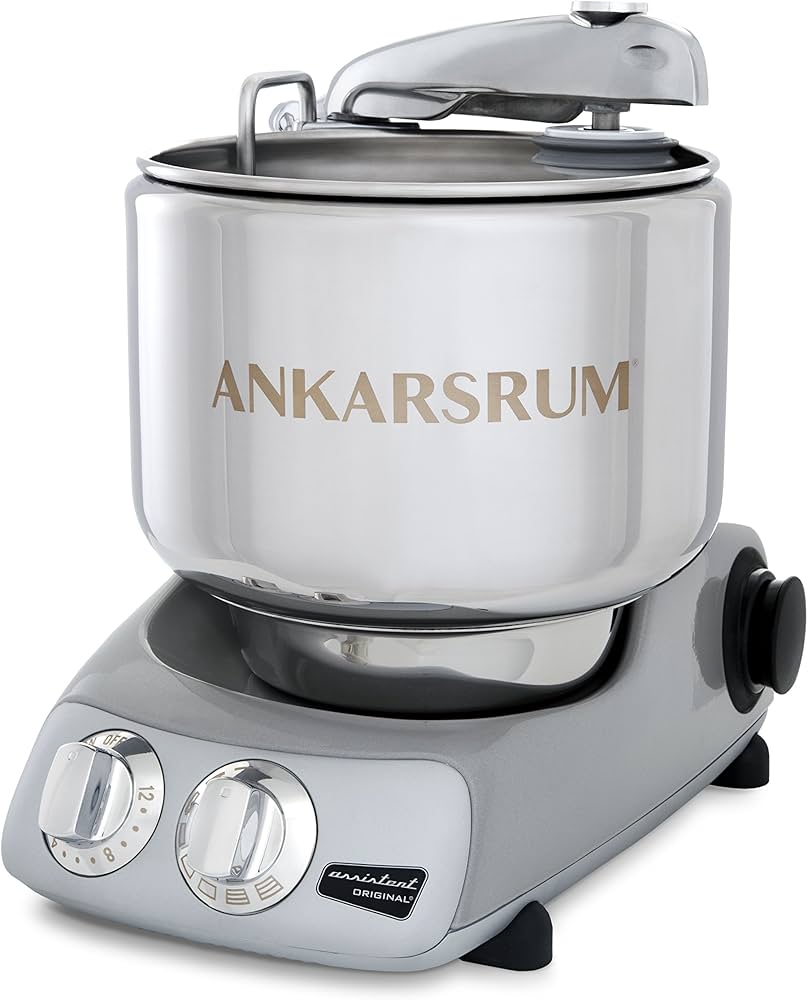
As an Amazon Associate, we may earn from qualifying purchases.
KitchenAid vs Bosch vs Ankarsrum
Choosing between KitchenAid, Bosch, and Ankarsrum means selecting a mechanical philosophy. KitchenAid uses a planetary mixing action with a stationary bowl and rotating beater. Bosch relies on a unique bottom-drive system with a flexible dough hook that spins inside a stationary bowl. Ankarsrum employs a roller and scraper system that presses dough against the bowl wall, mimicking manual kneading.
KitchenAid remains the standard for versatility. Its universal attachment hub allows users to switch between mixing, grinding, and pasta extrusion. However, its direct-drive gear system can struggle with stiff bread doughs, often overheating the motor during heavy loads. It excels at lighter tasks like whipping meringues or creaming butter for cookies.
Bosch stands out for raw power and speed. The Universal Plus model processes large batches of dense dough quickly, thanks to its powerful motor and efficient dual-head design. It is less versatile than KitchenAid, lacking a broad accessory ecosystem, but it handles heavy bread and pizza doughs with ease. The Bosch bowl is smaller, which can be limiting for large families.
Ankarsrum offers the most gentle kneading action. The roller and scraper method develops gluten without overworking the dough, resulting in superior texture for artisan breads. It is bulky and requires a learning curve to operate correctly. It is not ideal for whipping egg whites or mixing batters, making it a specialist tool rather than an all-in-one appliance.
| Brand | Mixing Mechanism | Best Use Case | Attachment Versatility |
|---|---|---|---|
| KitchenAid | Planetary (rotating beater) | Cookies, cakes, whipping | High |
| Bosch Universal | Bottom-drive flexible hook | Heavy bread doughs | Medium |
| Ankarsrum | Roller and scraper | Artisan bread, bagels | Low |
What to look for in a stand mixer
Choosing a stand mixer means balancing power, capacity, and versatility. The motor wattage determines how well the machine handles dense ingredients like bagel dough or thick cookie batches. While many entry-level models advertise high wattage, the actual torque and gear durability matter more for long-term performance. For meringue or whipped cream, a standard 250–300 watt motor is sufficient, but for heavy breads, you need a robust unit like the Bosch Universal Plus to avoid burning out the gears.
Bowl size dictates your batch volume. A 5-quart bowl, found in the KitchenAid Artisan, suits most home bakers making two loaves of bread or a dozen cookies at once. If you regularly feed a large family or prepare bulk meals, the 7-quart capacity of the KitchenAid Professional series or the 6.6-quart bowl of the Ankarsrum Original allows for larger loads without overworking the motor. Consider how the bowl’s shape affects mixing; a flat-beater design in the KitchenAid reaches the edges effectively, while the Ankarsrum’s roller system scrapes the bowl sides continuously.
Attachment hubs expand your mixer’s utility beyond mixing. The KitchenAid design is the industry standard for attachments, allowing you to add pasta rollers, meat grinders, or vegetable slicers. This ecosystem makes it a versatile kitchen appliance, whereas the Bosch and Ankarsrum often use proprietary or less common attachment systems. If you plan to use your mixer for tasks other than mixing, verify that the hub is compatible with the attachments you need.
Maintenance tips for stand mixers
Proper care extends the life of your stand mixer and ensures consistent performance across different task types. While all three brands—KitchenAid, Bosch, and Ankarsrum—require regular upkeep, their distinct mechanical designs dictate different cleaning protocols.
KitchenAid: Bowl and Beater Care
The iconic tilt-head and bowl-lift designs feature removable stainless steel or coated bowls. Wash these parts in warm, soapy water immediately after use to prevent residue from hardening, especially when making sticky meringue or heavy cookie dough. The flat beater, wire whip, and dough hook should also be hand-washed; avoid abrasive scouring pads that can damage non-stick coatings. Wipe the mixer head with a damp cloth, ensuring no water enters the motor housing.
Bosch: Gasket and Hub Inspection
The Bosch Universal mixer relies on a unique drive system with a central hub and a removable gasket. After mixing dense bagel dough or stiff bread dough, inspect the rubber gasket for wear or tears. A compromised gasket can lead to flour leakage into the motor area, causing premature failure. Clean the hub and gasket thoroughly after every use. Unlike KitchenAid, the Bosch bowl is often fixed or secured differently, so focus cleaning efforts on the attachment interface and the exterior housing.
Ankarsrum: Bowl and Roller Maintenance
The Ankarsrum’s large, heavy-duty bowl and rotating roller require careful handling. The bowl is typically stainless steel and dishwasher safe, but hand washing preserves the finish. The roller and scraper blade should be cleaned immediately after use to prevent dough from drying on the metal surfaces. Check the bottom of the bowl for any wear on the non-slip feet, which ensure stability during high-torque mixing. Lubricate the drive mechanism only if specified in the manual, as over-lubrication can attract dust and debris.
General Best Practices
Regardless of the brand, avoid submerging the main motor unit in water. Use a dry or slightly damp cloth for cleaning. Store the mixer in a dry place to prevent rust on metal components. Regularly check for loose screws or worn attachments, replacing them as needed to maintain optimal mixing performance.
Frequently asked: what to check next
Is the KitchenAid Artisan Plus better than the original Artisan?
The KitchenAid Artisan Plus is a distinct upgrade over the standard Artisan model. It features a larger bowl capacity and a flat-beater design that reaches closer to the bowl's edges, reducing the need to scrape down sides during heavy mixing. For most home bakers, this is the definitive KitchenAid choice, offering the versatility required for cookies, cakes, and meringues without the bulk of professional-grade units.
Can a Bosch Universal handle bagel dough or heavy bread?
Yes. The Bosch Universal is widely regarded as the superior machine for heavy doughs, including bagel dough and stiff bread recipes. Its unique bottom-driven mixing system and powerful motor allow it to knead dense doughs for extended periods without overheating. While it lacks the sleek aesthetic of a KitchenAid, it is often described by serious bakers as a workhorse that can handle days of continuous mixing.
How do KitchenAid and Ankarsrum attachment systems compare?
KitchenAid uses a universal hub that accepts a wide variety of aftermarket attachments, from pasta rollers to food grinders, making it a versatile kitchen station. The Ankarsrum, by contrast, uses a proprietary system focused on its large bowl and rotating roller/dough hook mechanism. While Ankarsrum excels at large-batch bread baking, its attachment ecosystem is far more limited compared to the extensive KitchenAid accessory lineup.
No comments yet. Be the first to share your thoughts!