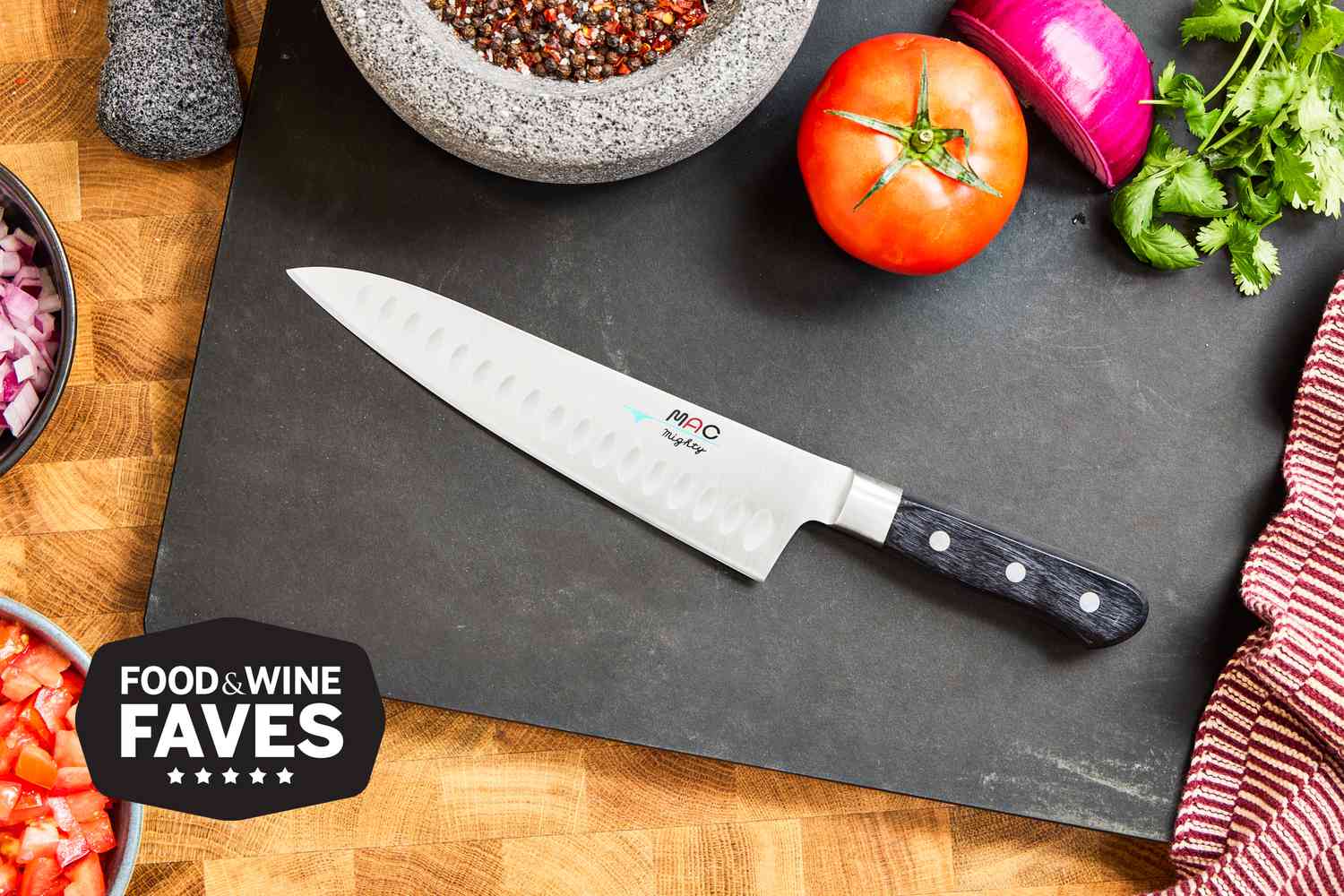

How we picked the best kitchen knives
Choosing a chef’s knife isn’t about finding the one with the flashiest handle or the highest price tag. It’s about finding a tool that disappears into your hand while you work. We tested dozens of blades to separate marketing hype from actual performance, focusing on three non-negotiable traits: edge retention, balance, and handle comfort.
First, we looked at edge retention. This is how long the blade stays sharp before you need to reach for a sharpening steel or whetstone. We tested this by chopping through dense vegetables and raw chicken repeatedly. Knives like the Wüsthof Classic 8-Inch Chef’s Knife and the Mercer Culinary 8-Inch Genesis Chef’s Knife impressed us by maintaining a clean bite through hundreds of cuts.
Second, we evaluated balance. A good knife should feel like an extension of your arm, not a heavy club. We checked the weight distribution between the blade and the handle. If the knife feels tip-heavy, your wrist will fatigue quickly. If it’s handle-heavy, you lose the precision needed for fine dicing.
Finally, we tested handle comfort. A beautiful knife is useless if it hurts to hold. We looked for ergonomic shapes that fit various hand sizes and materials that resist slipping when wet. Brands like Zwilling J.A. Henckels and Global offer distinct feels, but only those that stayed comfortable during extended use made our final list.
The best overall chef's knife: Wüsthof Classic 8-Inch
If you only buy one knife for your kitchen, the Wüsthof Classic 8-Inch Chef's Knife is the one to get. It sits at that rare intersection of professional-grade durability and home-kitchen forgiveness. Unlike some heavy German steel that feels like a sledgehammer, the Wüsthof balances weight and precision so it feels like an extension of your hand.
The 8-inch blade length is the sweet spot for almost every task. It is long enough to chop a head of lettuce or slice a roast in one smooth motion, but short enough to handle delicate work like mincing herbs or trimming vegetables without feeling unwieldy. The full tang construction—the metal extending all the way through the handle—provides balance that reduces hand fatigue during long prep sessions.
For most cooks, this knife is the workhorse that replaces three smaller tools. It handles onions, carrots, and meat with equal ease. While there are cheaper options like the Mercer Culinary Genesis or high-end Japanese alternatives, the Wüsthof offers the best combination of edge retention, ease of sharpening, and long-term reliability for the average home chef.


As an Amazon Associate, we may earn from qualifying purchases.
Best budget knife for everyday use
The Mercer Culinary Genesis 8-Inch Chef’s Knife is the practical choice for cooks who want professional performance without the premium price tag. It uses high-carbon stainless steel that holds an edge well and is easy to maintain, making it ideal for daily prep tasks like dicing onions or slicing vegetables.
Unlike many budget knives that feel flimsy or unbalanced, the Genesis features a full tang and a comfortable, slip-resistant handle. It offers a reliable cutting experience that rivals more expensive options, making it a smart entry point for new cooks or a durable backup for experienced ones.
Best Premium Knife for Serious Cooks
If you are ready to invest in a tool that will outlast your current cookware, the Wüsthof Classic Ikon 8-inch Chef’s Knife is the benchmark for high-end German steel. Unlike budget options that feel like disposable appliances, this knife offers a full tang and a precision-forged blade that delivers consistent balance and edge retention.
The craftsmanship here is evident in every cut. The handle features a distinctive triple-rivet design that provides a secure grip, even when your hands are wet or greasy. It feels substantial in the hand without being heavy, allowing for precise rock-chopping or delicate julienne work. The steel holds an edge longer than standard stainless, meaning you’ll spend less time sharpening and more time cooking.
For those who prefer a sharper, more aggressive angle, the Shun Classic 8-inch Chef’s Knife is the alternative choice. Its VG-MAX core steel offers a razor-sharp edge that slices through tomatoes like butter. The Damascus-clad blade is not just visually striking but also reduces friction, preventing food from sticking to the side.
Both knives represent the top tier of home kitchen tools. They are heavier and more expensive, but they pay for themselves in durability and performance. Choose Wüsthof for traditional German reliability or Shun for Japanese precision.
Best knife sets for complete kitchens
If you are starting from scratch or replacing a drawer full of dull blades, a complete knife set is the most efficient way to equip your kitchen. Instead of hunting down individual handles and blades, these sets provide a cohesive look and all the essential tools for everyday cooking.
When evaluating a set, look beyond the piece count. A 15-piece set stuffed with useless gadgets is less valuable than a 6-piece set with high-carbon steel that actually lasts. The core pieces you need are a chef’s knife, a paring knife, and a serrated bread knife. Everything else, like utility or steak knives, depends on your specific cooking habits.
The table below compares some of the most reliable options available, focusing on steel type, included pieces, and overall value. These selections represent a mix of professional-grade durability and beginner-friendly affordability.
| Set Name | Total Pieces | Primary Steel | Best For |
|---|---|---|---|
| Toadfish Abalone Damascus | 8 | Damascus Stainless | Aesthetics and precision slicing |
| Victorinox Fibrox Pro | 7 | High-Carbon Stainless | Durability and professional use |
| Henckels Statement | 15 | German Stainless | Complete kitchen starter kits |
| Shun Classic | 7 | VG-MAX Core | Japanese-style sharpness |
How to care for your kitchen knives
Proper maintenance ensures your knives last for years. Always hand-wash your knives with warm, soapy water and dry them immediately to prevent water spots and rust. Avoid putting them in the dishwasher, as the harsh detergents and high heat can damage the blade edge and handle materials.
Store your knives in a block, on a magnetic strip, or in a protective sheath. Leaving them loose in a drawer can dull the edges and pose a safety risk. Regularly honing the blade with a steel before or after use helps maintain the edge alignment, while professional sharpening should be done once or twice a year depending on usage.
No comments yet. Be the first to share your thoughts!