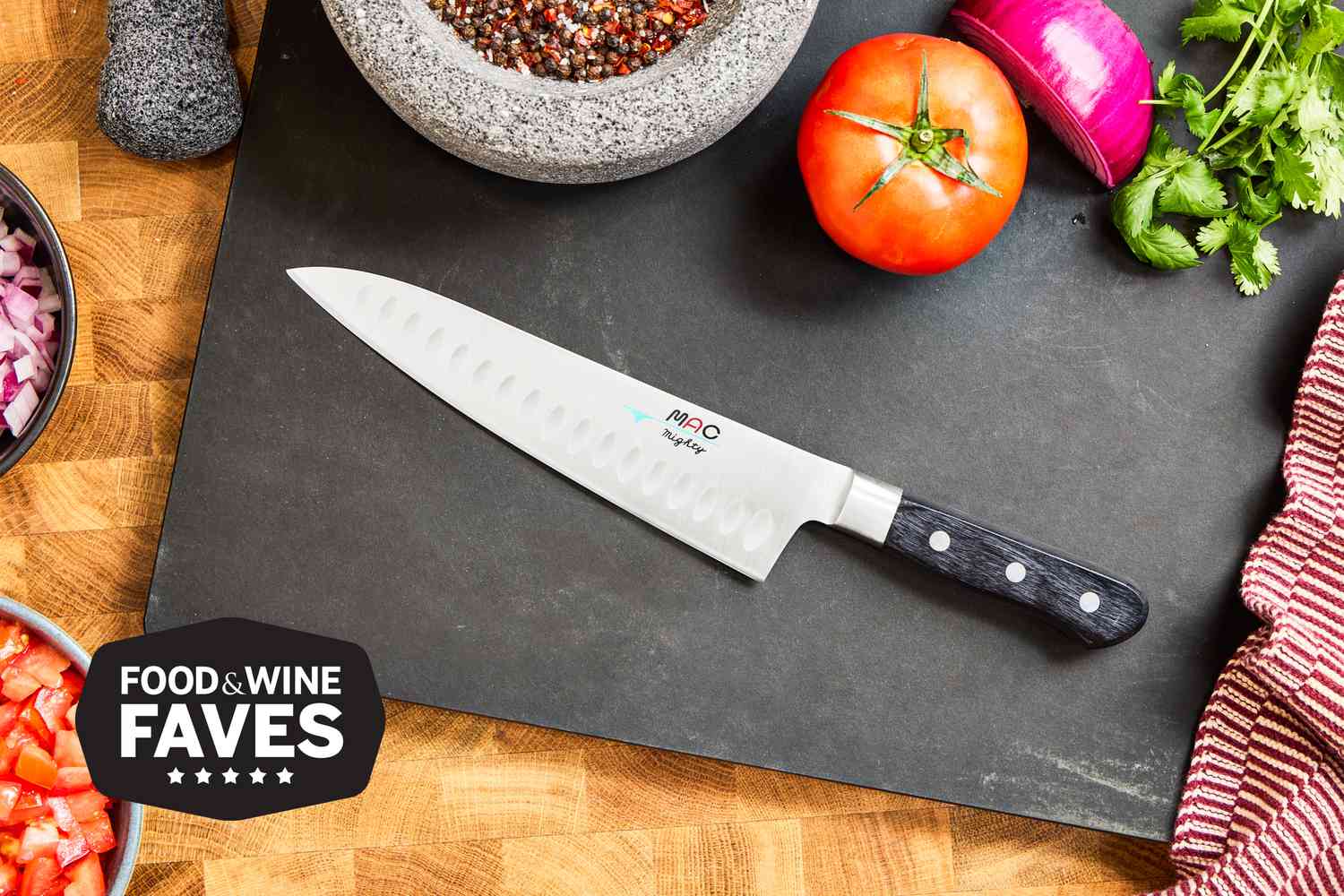

How we tested chef's knives
We evaluate chef's knives using three core metrics: sharpness, balance, and edge retention. Our goal is to determine how each blade performs during actual prep work, not just in a controlled lab setting.
Sharpness is the first filter. We test initial edge geometry by slicing through standard produce and protein. A knife must cut cleanly without crushing cell walls in tomatoes or tearing through delicate fish skin. We record the force required to complete a standard push cut.
Balance determines comfort over time. We assess the weight distribution relative to the bolster and handle. A well-balanced chef's knife feels like an extension of the hand, reducing fatigue during long prep sessions. We test this by holding the knife at the balance point and simulating rocking motions.
Edge retention measures longevity. We track how many cuts a blade can make before it requires sharpening. This metric separates premium steel from mediocre options. A high-quality chef's knife should maintain its edge through dozens of heavy-use tasks.
Best overall chef's knife
The Zwilling Pro 8-inch chef’s knife stands out as the most reliable all-around tool for home cooks. It balances sharpness, durability, and price in a way that few competitors match. For 99% of serious home chefs, this knife offers the best combination of performance and longevity without the premium price tag of high-end Japanese steel. It holds an edge well and feels solid in the hand, making it a true workhorse.
While Shun knives are popular for their sharpness and aesthetic appeal, the Zwilling Pro provides a more practical daily driver. It is less brittle than some Japanese alternatives and easier to maintain for the average user. The Wüsthof Classic is another strong contender, but the Zwilling Pro often edges it out in user feedback regarding balance and comfort during extended prep sessions.

If you want a single knife that handles everything from chopping vegetables to breaking down chicken, this is the one to buy. It is sharp out of the box and stays that way longer than many budget options. You do not need to buy a separate utility knife for most tasks.
Best budget chef's knife
A budget chef's knife doesn't mean a compromise on performance. The Victorinox Fibrox 8-inch chef's knife is the industry standard for high-value entry points. Professional kitchens worldwide rely on this tool because it delivers sharp, consistent cuts without the premium price tag of forged European steel.
The blade is stamped from high-carbon stainless steel, which keeps it lightweight and easy to maneuver. This weight distribution reduces hand fatigue during long prep sessions. The handle is made of textured Fibrox, a synthetic material that provides a secure, non-slip grip even when wet or greasy. This practical design prioritizes function over form, making it ideal for home cooks who need a reliable workhorse.
While it lacks the aesthetic appeal of Damascus or high-end German steel, the Victorinox focuses entirely on cutting efficiency. It holds an edge well enough for most home cooking tasks and is easy to maintain. For those seeking professional-grade performance without the investment, this knife remains the most logical choice.

Best Japanese steel knives
Japanese knives are defined by their distinct blade geometry and superior sharpness, making them a favorite among enthusiasts who prioritize precision. Unlike the wider, thicker Western blades often used for chopping, Japanese designs typically feature thinner profiles and sharper angles. This geometry allows for cleaner cuts through vegetables and proteins with less resistance, though it requires a bit more care to maintain the edge.
The Shun Classic Chef Knife stands out as a reliable entry point for those interested in Japanese steel. It features a VG-MAX core clad in stainless steel, offering a balance of hardness and corrosion resistance that holds an edge well. Users consistently praise its sharpness out of the box and its comfortable handle, which provides good control for detailed tasks. While it commands a premium price, the performance justifies the cost for home cooks who want professional-grade results.
For those willing to invest in higher-end options, artisan Japanese knives offer exceptional toughness and balance. Brands like Artisan Revere are noted for their impressive performance, though they come with a steeper price tag. When choosing a Japanese knife, consider the maintenance required; these blades are harder and more brittle than their Western counterparts, meaning they need regular honing and careful hand-washing to prevent chipping.
Best knife sets for home kitchens
Buying a coordinated knife set is often the most efficient way to build a functional kitchen toolkit without the guesswork of selecting individual pieces. For most home cooks, a well-chosen set provides the essential foundation: a chef’s knife, a paring knife, a serrated bread knife, and a utility or santoku blade, usually accompanied by a cutting board and storage block.
The value of a set lies in consistency. When blades are forged from the same steel and balanced similarly, they feel familiar in your hand, reducing fatigue during prep work. However, not all sets are created equal. Some include numerous specialized tools that sit unused, while others compromise on steel quality to hit a lower price point. The goal is to find a set where the core knives perform reliably.
Below are tested options that balance performance with completeness. These selections prioritize durable steel and ergonomic handles over excessive piece counts.


As an Amazon Associate, we may earn from qualifying purchases.
How to choose your first knife
Selecting your first chef’s knife requires balancing blade length, handle material, and steel type. These three variables determine how the tool feels in your hand and how well it performs on your specific cutting board and ingredients.
Blade length
An 8-inch blade is the standard recommendation for most home cooks. It provides enough surface area for rocking cuts through vegetables and herbs while remaining manageable for precision work. Shorter 6-inch knives offer better control for small tasks but require more strokes for larger prep jobs. Longer 10-inch blades excel at slicing large roasts or melons but can feel unwieldy for daily chopping.
Handle material
The handle determines your grip security and comfort during extended use. Wood handles offer a traditional feel and warm aesthetic but require hand-washing and occasional oiling to prevent cracking. Synthetic materials like polypropylene or micarta are durable, dishwasher-safe, and resistant to moisture absorption. Metal handles provide a modern look and extreme durability but can become slippery if wet and may conduct temperature.
Steel type
Steel composition dictates edge retention and maintenance needs. High-carbon stainless steel, found in brands like Zwilling and Wusthof, offers a balance of sharpness and rust resistance, making it ideal for beginners. Carbon steel holds an exceptionally sharp edge but requires immediate drying to prevent oxidation. German-style knives typically use softer steel that is easier to sharpen but requires more frequent honing. Japanese knives often use harder steel that stays sharp longer but is more brittle and prone to chipping if dropped.
| Feature | Option A | Option B |
|---|---|---|
| Blade Length | 8-inch (Standard) | 6-inch (Precision) |
| Handle | Wood (Traditional) | Synthetic (Durable) |
| Steel | High-Carbon Stainless | Carbon Steel (Sharp) |
Common questions about chef's knives
What is the best all-around chef's knife? The Wüsthof Classic 8-inch Chef's Knife consistently ranks as the best overall choice for its balance, edge retention, and durability. For budget-conscious cooks, the Victorinox Fibrox Pro offers nearly identical performance at a fraction of the cost, making it the standard in many professional kitchens.
Should I buy a Japanese or German chef's knife? German knives, like those from Wüsthof, feature thicker blades that are durable and resistant to chipping, making them ideal for heavy-duty tasks and rocking cuts. Japanese knives, such as the Shun Classic, have thinner, harder steel that holds a sharper edge for precision work but requires more careful handling to avoid damage.
How often should I sharpen my chef's knife? Home cooks should sharpen their chef's knife every two to three months using a whetstone or pull-through sharpener. Professional kitchens may require weekly sharpening depending on usage intensity. Regular honing with a steel rod between sharpenings helps maintain the edge alignment.
No comments yet. Be the first to share your thoughts!