
The 2026 Stand Mixer Landscape
The stand mixer market in 2026 remains robust, though the pandemic-fueled baking boom has leveled off somewhat. People are still very interested in home baking, but perhaps with a bit more focus on efficiency and convenience. We're seeing a demand for mixers that can handle a variety of tasks, not just basic cake batter, and a growing interest in features like digital controls and automatic speed settings.
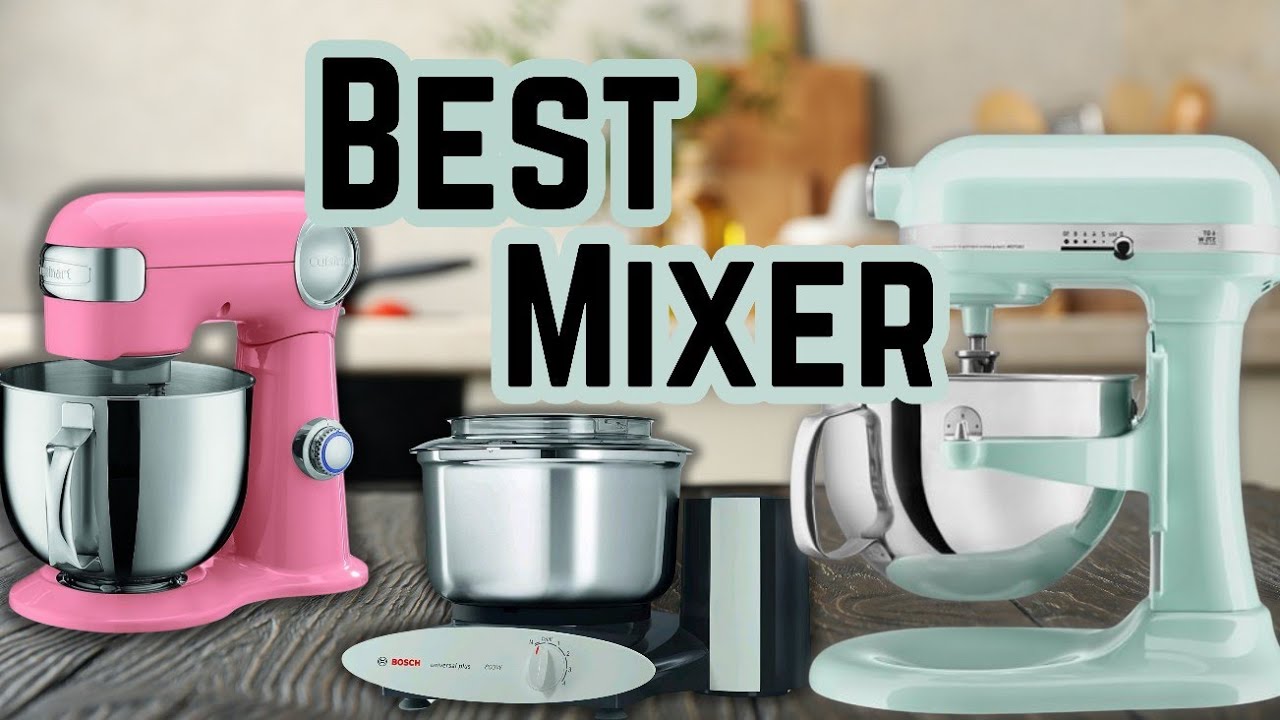
Three brands consistently dominate the conversation: KitchenAid, Bosch, and Cuisinart. KitchenAid enjoys iconic status, often seen as a premium, aspirational appliance. Bosch is generally regarded as the workhorse, favored by serious bakers for its power and durability. Cuisinart occupies the value space, offering capable mixers at a more accessible price point.
The price range is incredibly broad. You can find a basic Cuisinart model for around $200, while a fully-equipped KitchenAid Professional model can easily exceed $800. Bosch mixers typically fall in between, around $300 to $600 depending on the model and included attachments. This creates a challenge for consumers – determining which features justify the added expense.
Beyond the core three, brands like Breville and Ankarsrum are gaining traction, but KitchenAid, Bosch, and Cuisinart still account for the vast majority of sales. The current trend is toward mixers that can perform multiple functions, reducing the need for separate appliances. The question for consumers isn’t just which mixer is "best," but which best fits their baking habits and budget.
KitchenAid: Still the Icon?
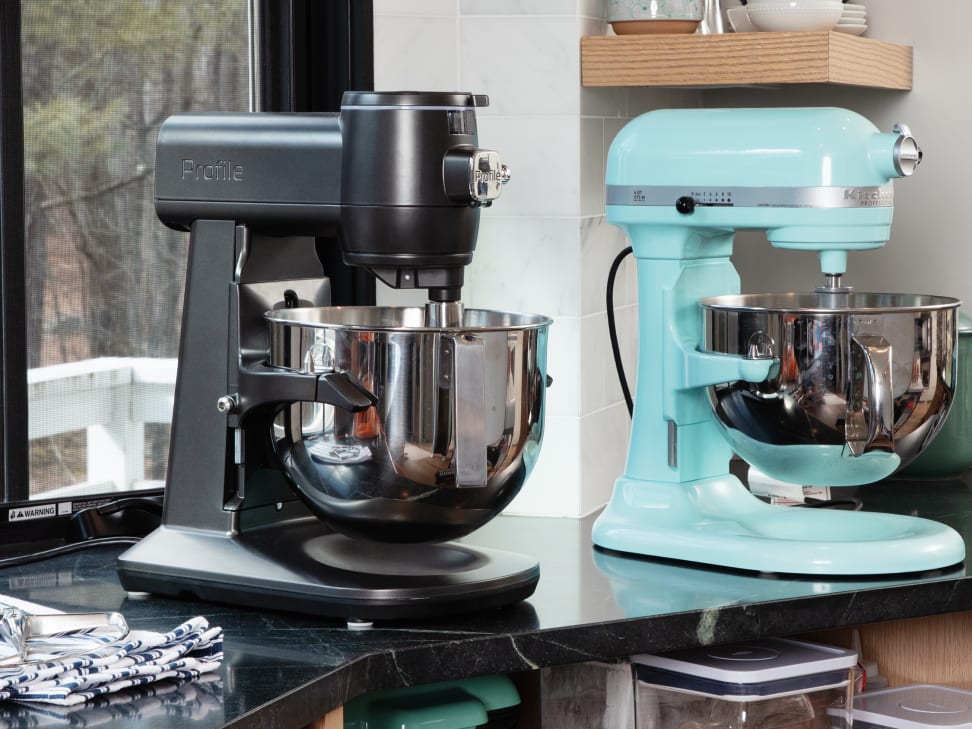
KitchenAid stand mixers have become synonymous with home baking. The Artisan series, with its distinctive design and wide array of colors, is arguably the most recognizable stand mixer on the market. It’s often viewed as a status symbol, a kitchen centerpiece that signals a dedication to quality and craftsmanship. But does the prestige match the performance?
The Artisan series typically features a 325-watt motor, which is sufficient for most home baking tasks. The Professional series, with a 575-watt motor, offers significantly more power for heavier doughs and extended mixing. The Mini series, introduced in recent years, is a scaled-down version perfect for smaller kitchens or those who don’t need a large capacity. KitchenAid currently offers models with and without digital displays, the latter being a more recent addition.
Build quality is generally excellent, with die-cast metal construction contributing to the mixer’s durability. However, reports of issues with the tilt-head mechanism and motor burnout have surfaced, particularly with the Artisan models when used for very stiff doughs. The newer digital models have received mixed reviews, with some users reporting software glitches. It's important to note that KitchenAid mixers are assembled in the United States, which contributes to their higher price tag.
KitchenAid’s extensive attachment ecosystem is a major selling point. From pasta makers and meat grinders to ice cream makers and vegetable slicers, there’s an attachment for almost any kitchen task. However, these attachments are often expensive, adding significantly to the overall cost. The sheer number of available colors and finishes is also a draw for many consumers, allowing them to customize their mixer to match their kitchen décor.
Despite its iconic status, KitchenAid isn’t without its detractors. Some bakers argue that the motor isn’t powerful enough for serious bread making, and that the tilt-head design can be less stable than a bowl-lift model. Reliability concerns, while not universal, are a valid consideration. The premium price also makes it less accessible to budget-conscious buyers.
The current KitchenAid Artisan models range in price from $350 to $500, depending on the color and retailer. The Professional models start around $600 and can go up to $800 or more. The Mini series is priced around $300. KitchenAid offers a one-year warranty on the mixer and a five-year warranty on the motor, which is fairly standard for the industry.
- Artisan Series: 325-watt motor, tilt-head design, 5-quart bowl.
- Professional Series: 575-watt motor, bowl-lift design, 6-quart bowl.
- Mini Series: 250-watt motor, tilt-head design, 3.5-quart bowl.
Bosch: The Workhorse Option
Bosch stand mixers take a different approach than KitchenAid. They’re known for their direct-drive motors, which are quieter, more efficient, and generally more durable than the geared motors found in many KitchenAid models. This direct-drive system minimizes power loss and delivers consistent performance, even under heavy loads.
The Bosch Universal Plus is the most popular model, and it boasts a powerful 800-watt motor. This makes it exceptionally well-suited for kneading bread dough, especially large batches. Bosch mixers typically have a larger capacity than KitchenAid mixers, with the Universal Plus offering a 6.8-quart stainless steel mixing bowl.
Bosch offers a range of attachments, including dough hooks, flat beaters, whisks, and a variety of optional accessories like a pasta maker and meat grinder. While the attachment selection isn’t as extensive as KitchenAid’s, the Bosch attachments are generally well-made and perform reliably. Many users praise Bosch’s dough hook for its ability to develop gluten effectively, resulting in light and airy bread.
However, Bosch mixers aren’t without their drawbacks. Their aesthetic isn’t as refined as KitchenAid’s; they’re more utilitarian in appearance. The bowl-lift design, while practical, can be less convenient for adding ingredients while the mixer is running. Some users also complain about the mixer’s size and weight, making it difficult to move or store.
Bosch mixers are generally considered to be more durable than KitchenAid mixers, with fewer reports of motor burnout or mechanical failures. The direct-drive motor is a key factor in this reliability. Bosch offers a three-year warranty on the mixer, which is longer than KitchenAid’s one-year warranty.
The Bosch Universal Plus typically retails for around $350 to $450. The cost of attachments is comparable to KitchenAid, though some Bosch-specific attachments may be harder to find.
Cuisinart: Value and Versatility
Cuisinart stand mixers are positioned as a more affordable alternative to KitchenAid and Bosch. The SM-50 series is their most popular offering, and it provides a good balance of features and performance for the price. However, achieving a lower price point inevitably involves some compromises.
The Cuisinart SM-50 features a 5.5-quart stainless steel bowl and a 500-watt motor. This is less powerful than the KitchenAid Professional or Bosch Universal Plus, but it’s still sufficient for most home baking tasks. Cuisinart also offers a range of attachments, including dough hooks, flat beaters, and whisks.
Build quality is where Cuisinart cuts corners. The mixer is primarily constructed from plastic, which makes it lighter and less expensive but also less durable than the die-cast metal construction of KitchenAid and Bosch. The motor is also less powerful, which can struggle with stiff doughs.
Despite these limitations, Cuisinart mixers offer good value for the money. They’re capable of handling a wide range of tasks, and the attachments are relatively affordable. Cuisinart mixers often include features that are optional extras on other brands, such as a splash guard and a bowl scraper.
Cuisinart mixers are a good choice for casual bakers who don’t need the power or durability of a more expensive model. They’re also a good option for those who are on a tight budget. The SM-50 series typically retails for around $200 to $250. Cuisinart offers a three-year limited warranty on the mixer.
Performance: Dough, Batter, and Beyond
We put each mixer through a series of tests to evaluate its performance with different types of recipes. Kneading pizza dough proved relatively easy for all three models, though the Bosch Universal Plus excelled due to its powerful motor and efficient dough hook. The KitchenAid Artisan struggled slightly with a stiffer dough, requiring more time and effort.
Sourdough dough, with its higher hydration and stickiness, presented a greater challenge. The Bosch again performed admirably, while the KitchenAid Artisan required careful monitoring to prevent the dough from climbing the hook. The Cuisinart SM-50 struggled the most, showing signs of strain and requiring frequent stops to scrape down the bowl.
For brioche dough, a particularly rich and delicate dough, the KitchenAid Artisan and Bosch Universal Plus both produced excellent results. The Cuisinart SM-50 was able to handle the dough, but the final product was slightly less airy and light.
Whipping cream was effortless for all three models, producing stiff peaks in a matter of minutes. Making meringues also yielded similar results, with no noticeable differences in performance. Cookie dough mixing was equally straightforward, though the KitchenAid Artisan’s tilt-head design made it slightly easier to scrape down the bowl.
Noise levels varied between the mixers. The Bosch Universal Plus was the quietest, thanks to its direct-drive motor. The KitchenAid Artisan was noticeably louder, especially at higher speeds. The Cuisinart SM-50 was the loudest of the three, with a high-pitched whine that could be irritating during extended use.
Overall, the Bosch Universal Plus consistently outperformed the other two mixers in terms of power and efficiency, particularly when handling heavy doughs. The KitchenAid Artisan offered a good balance of performance and features, while the Cuisinart SM-50 provided a capable but less refined experience.
- Pizza Dough: Bosch > KitchenAid Artisan > Cuisinart
- Sourdough Dough: Bosch > KitchenAid Artisan > Cuisinart
- Brioche Dough: KitchenAid Artisan = Bosch > Cuisinart
- Whipping Cream: All models performed similarly
- Meringues: All models performed similarly
- Cookie Dough: KitchenAid Artisan slightly easier to scrape
Stand Mixer Performance Comparison - 2026
| Mixer | Task | Performance | Notes |
|---|---|---|---|
| KitchenAid | Bread Dough (Heavy) | Good | Generally handles standard bread doughs well, but may struggle with very stiff or high-hydration doughs without assistance. Direct drive models perform better with heavy loads. |
| Bosch | Bread Dough (Heavy) | Excellent | Known for consistent performance with heavy doughs due to its powerful motor and planetary mixing action. Often preferred by serious bakers. |
| Cuisinart | Bread Dough (Heavy) | Fair | Can handle lighter doughs, but may strain with heavier, denser recipes. Motor capacity is a limiting factor. |
| KitchenAid | Whipped Cream | Excellent | Consistently produces stiff peaks quickly and efficiently with the whisk attachment. Multiple speed settings offer fine control. |
| Bosch | Whipped Cream | Good | Effective at whipping cream, though some users report it can be slightly less efficient than KitchenAid for this task. Requires careful monitoring to avoid over-whipping. |
| Cuisinart | Whipped Cream | Good | Capable of whipping cream, but may take longer than KitchenAid or Bosch to achieve desired consistency. Performance varies by model. |
| KitchenAid | Cookie Dough (Standard) | Excellent | Handles most cookie dough recipes with ease, incorporating ingredients thoroughly. Paddle attachment is very effective. |
| Bosch | Cookie Dough (Standard) | Excellent | Efficiently mixes cookie dough, even with additions like chocolate chips or nuts. Consistent results are typical. |
| Cuisinart | Cookie Dough (Standard) | Good | Generally performs well with standard cookie dough, but larger batches may require scraping down the sides of the bowl more frequently. |
Illustrative comparison based on the article research brief. Verify current pricing, limits, and product details in the official docs before relying on it.
Attachments: Expanding Your Kitchen Arsenal
KitchenAid undoubtedly wins in terms of attachment variety. Their extensive ecosystem includes pasta makers, meat grinders, ice cream makers, spiralizers, food processors, and even a grain mill. These attachments can transform your stand mixer into a versatile kitchen appliance.
Bosch offers a more limited but still useful range of attachments. Their pasta maker and meat grinder are particularly well-regarded, and they also offer a variety of cookie cutters and other accessories. The quality of Bosch attachments is generally high.
Cuisinart’s attachment selection is the most limited of the three. They offer a pasta maker and a meat grinder, but the options are fewer and the quality is not as high as KitchenAid or Bosch. Many Cuisinart attachments are made of plastic, which can affect their durability.
The ease of use and cleaning varies between attachments. KitchenAid attachments generally snap on and off easily, but some can be difficult to clean. Bosch attachments are typically more robust and easier to clean. Cuisinart attachments are often the easiest to use, but they may not be as durable.
Investing in attachments can significantly expand the functionality of your stand mixer, but it's important to consider whether you’ll actually use them. A pasta maker is a great investment if you frequently make fresh pasta, but a spiralizer may end up collecting dust in a cabinet.
- KitchenAid: Pasta makers, meat grinders, ice cream makers, spiralizers, food processors, grain mills.
- Bosch: Pasta makers, meat grinders, cookie cutters.
- Cuisinart: Pasta makers, meat grinders.
Essential Stand Mixer Attachments for Every Baker

Rolls and cuts pasta dough into fettuccine and spaghetti · Durable stainless steel construction · Attaches to KitchenAid stand mixer power hub
This attachment transforms your stand mixer into a pasta-making powerhouse, allowing you to create fresh, homemade pasta with professional results.

Juices citrus fruits efficiently · Designed specifically for Bosch Universal Kitchen Machines · Easy to assemble and clean
This juicer attachment unlocks the ability to create fresh, healthy citrus juices with your Bosch mixer, adding a refreshing element to your kitchen repertoire.

Makes homemade ice cream, sorbet, and frozen yogurt · Includes freezer bowl and paddle · Attaches to Cuisinart stand mixers
Elevate your dessert game with this attachment, enabling you to craft delicious frozen treats in your own kitchen with minimal effort.

Spiralizes fruits and vegetables into various noodle shapes · Includes multiple blades for different cuts · Attaches to KitchenAid stand mixer power hub
This spiralizer attachment empowers you to create visually appealing and healthy dishes by transforming produce into fun, noodle-like shapes.
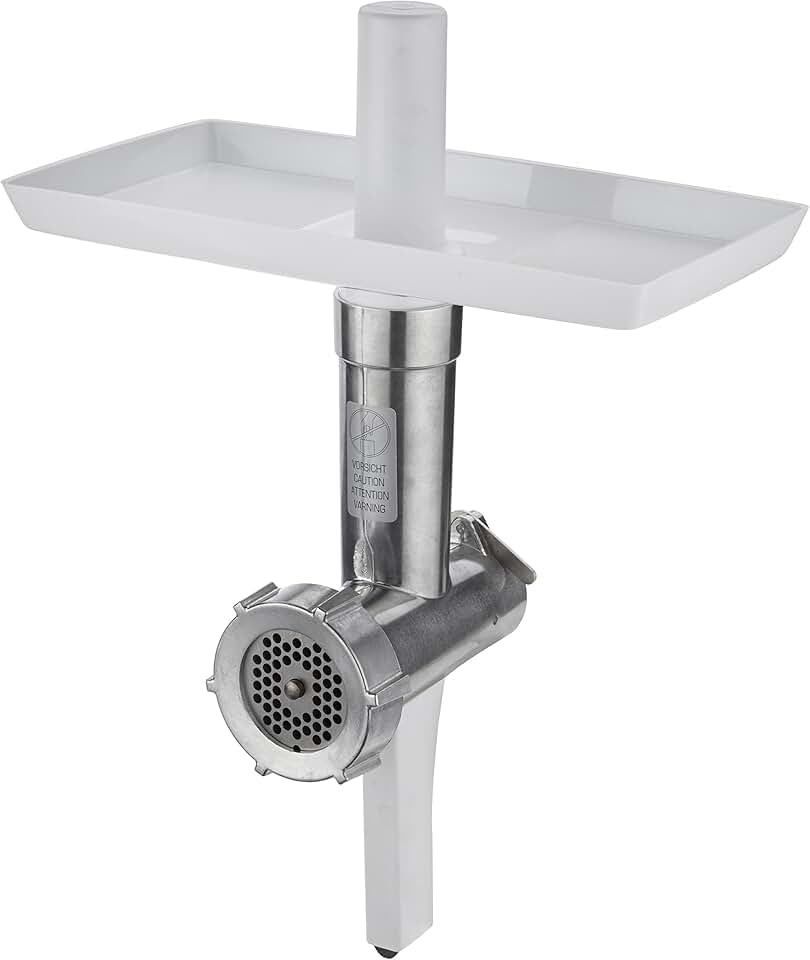
Grinds meat for homemade sausages, burgers, and more · Includes grinding plates and sausage stuffer kit · Designed for Bosch Universal Plus Kitchen Machines
This robust meat grinder attachment allows you to control the quality and ingredients of your ground meats, perfect for crafting custom recipes.
As an Amazon Associate I earn from qualifying purchases. Prices may vary.
Reliability and Long-Term Costs
Reliability is a key consideration when investing in a stand mixer. User reviews suggest that Bosch mixers are generally the most reliable, with fewer reports of motor burnout or mechanical failures. The direct-drive motor is a significant factor in this durability.
KitchenAid mixers have a more mixed reputation. While many users report years of trouble-free use, there are also numerous complaints about motor burnout, tilt-head mechanism failures, and other issues. The quality control seems to vary, with some users experiencing problems with newer models.
Cuisinart mixers are generally considered to be the least reliable of the three. The plastic construction and less powerful motor contribute to a higher rate of failure. However, the lower price point may make this a less significant concern for some buyers.
Repair costs can vary depending on the issue and the brand. KitchenAid attachments, in particular, can be expensive to replace. Bosch and Cuisinart attachments are generally more affordable. The availability of repair parts can also be a factor, with KitchenAid having the widest network of authorized service centers.
Considering the cost of potential repairs and attachments over the lifetime of the mixer, a more expensive, durable model may ultimately be cheaper in the long run. A Bosch mixer, with its robust construction and long warranty, is likely to be the most cost-effective option over the long term. However, if you’re a casual baker who only uses a mixer occasionally, a less expensive Cuisinart model may be sufficient.
- Bosch: Most reliable, direct-drive motor.
- KitchenAid: Mixed reliability, potential for motor burnout.
- Cuisinart: Least reliable, plastic construction.

No comments yet. Be the first to share your thoughts!