
The state of stand mixers in 2026
Stand mixer sales are steady in 2026. People are moving away from basic cake mixing and looking for machines that handle heavy bread doughs and specialized tasks. This shift makes motor power and attachment variety more important than they were a few years ago.
Currently, KitchenAid maintains a strong brand presence and a significant market share, largely built on decades of reputation and a wide range of color options. However, Bosch is steadily gaining ground, particularly among serious bakers who prioritize power and durability. Cuisinart continues to appeal to budget-conscious consumers, though its position is increasingly challenged by smaller brands offering competitive pricing. I've noticed a growing trend in consumers seeking mixers that can handle heavier doughs, like sourdough, indicating a move towards more artisan baking.
Shipping delays still hit specific KitchenAid colors and limited editions. Prices are higher this year because of material costs, so expect to pay about 10% more than last year's MSRP. If you want a specific shade like 'Blue Velvet,' you might have to wait a few weeks for a restock.
Feature-wise, we're seeing incremental improvements rather than revolutionary changes. Many manufacturers are focusing on refining existing designs and improving motor efficiency. Smart home integration remains a niche feature, with limited practical applications for most bakers. The biggest advancements seem to be in the quality and variety of available attachments, expanding the functionality of these machines beyond simple mixing.
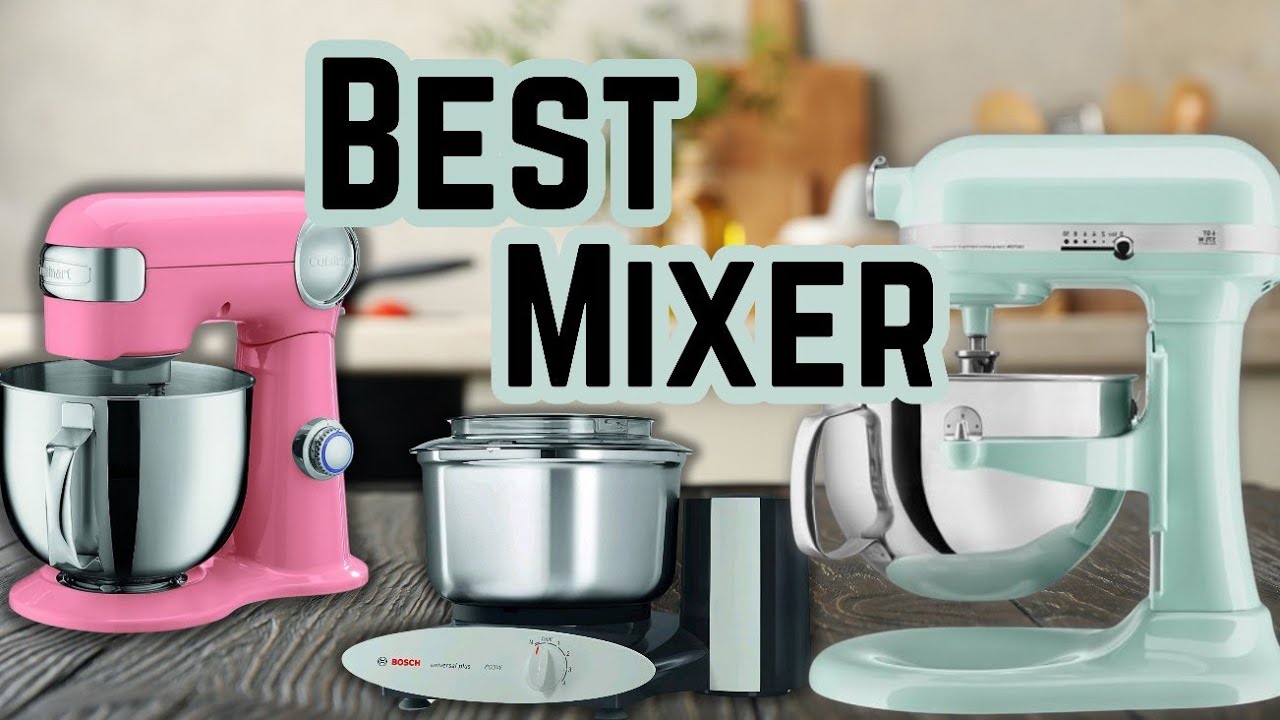
KitchenAid: reliable but aging
KitchenAid stand mixers are, for many, the stand mixer. Their iconic design and wide range of colors have made them a staple in kitchens for generations. In 2026, the lineup includes the Classic, Artisan, Professional, Mini, and Pro Line models. The Classic models offer a solid entry point for casual bakers, while the Artisan series remains the most popular choice for its balance of features and price. The Professional models boast more powerful motors and larger capacities, catering to serious bakers.
The Artisan model (around $400-$600 depending on color and retailer) is a sweet spot for many. It has a 5-quart bowl, a 325-watt motor, and 10 speed settings. The Mini (around $350-$450) is a great option for small kitchens or those who don’t need a large capacity, but its smaller motor can struggle with heavy doughs. The Professional 600 series (around $600-$800) features a 6-quart bowl and a more powerful 575-watt motor, making it ideal for frequent baking and large batches. The Pro Line series, with its commercial-grade construction, is the most expensive option, starting around $800 and going up from there.
A key difference within the KitchenAid range lies in the drive system. Most models utilize a planetary gear system, where the beater spirals around the bowl, ensuring thorough mixing. However, the Pro Line models employ a direct-drive system, which is generally considered more durable and efficient. This direct-drive system eliminates gears, reducing wear and tear and providing more power directly to the attachment. It’s a significant advantage for those who use their mixers frequently and for demanding tasks.
Common complaints about KitchenAid mixers often revolve around the tilt-head design, which can sometimes wobble during heavy use. Some users have also reported issues with the motor overheating when making very stiff doughs. KitchenAid has addressed some of these concerns by improving the motor cooling systems in newer models and reinforcing the tilt-head mechanism. However, these issues still surface in online forums and user reviews. The quality control has been inconsistent in recent years, with some reports of defects in newer models.
The attachment ecosystem for KitchenAid mixers is vast and arguably the most extensive in the industry. From pasta makers and meat grinders to spiralizers and ice cream makers, there’s an attachment for almost any culinary task. The cost of attachments can add up quickly, however – a good pasta maker can easily set you back $200 or more. Be sure to check compatibility before purchasing, as not all attachments are compatible with all models.
- Artisan Series: The standard 5-quart model with a 325-watt motor.
- Professional 600 Series: Larger capacity, 6-quart bowl, 575-watt motor.
- Pro Line Series: Commercial-grade, direct-drive, highest power and durability.
- Mini: Compact size, ideal for small kitchens, less powerful motor.
Featured Products
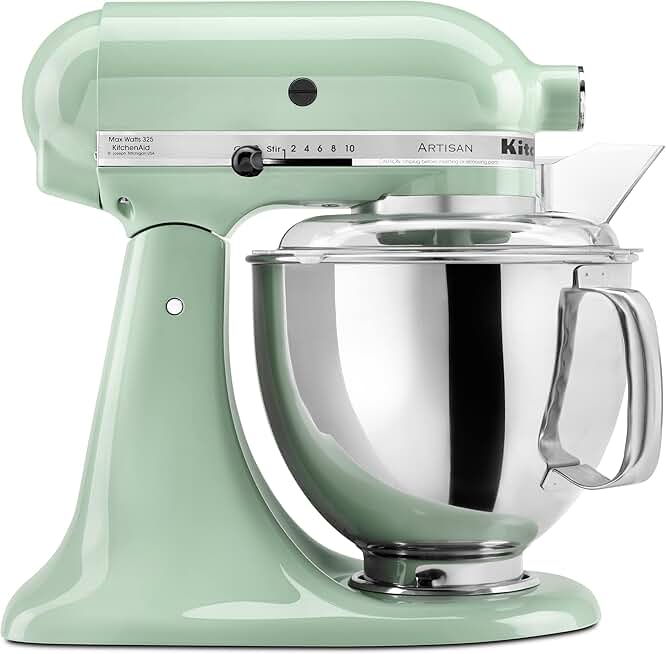
5-quart stainless steel bowl with pouring shield · Tilt-head design for easy access to bowl and beaters · 10 speeds for versatile mixing
The KitchenAid Artisan Series 5 Quart Tilt Head Stand Mixer is a benchmark for home bakers, offering robust performance and iconic design in a popular capacity.

Flex edge beater for thorough scraping of bowl sides · Designed for KitchenAid 6-quart bowl-lift stand mixers · Durable construction for consistent mixing
This Roabertic Flex Edge Beater enhances the functionality of compatible KitchenAid mixers by ensuring all ingredients are incorporated efficiently.

3.5-quart stainless steel bowl · Compact and lightweight design · Tilt-head for convenient operation
The KitchenAid Artisan Mini offers the renowned KitchenAid performance in a smaller footprint, ideal for kitchens with limited space.

4.5-quart stainless steel bowl · Tilt-head design for accessibility · Durable all-metal construction
The KitchenAid Classic Series 4.5 Quart Tilt-Head Stand Mixer provides essential mixing power and durability at a more accessible price point.
As an Amazon Associate I earn from qualifying purchases. Prices may vary.
Bosch: Power and Precision
Bosch stand mixers, particularly the Universal Plus and Compact models, are renowned for their power and ability to handle heavy doughs. The Universal Plus (around $300-$400) is the workhorse of the Bosch lineup, featuring a robust 800-watt motor and a large 6.5-quart bowl. The Compact model (around $250-$350) is a smaller, more affordable option, but still packs a significant punch.
Bosch mixers differ from KitchenAid in several key ways. They typically have a bowl-lift design, where the bowl is raised and lowered into the mixing head, rather than a tilt-head design. This provides greater stability, especially when working with heavy doughs. The Bosch motors are also generally more powerful than those found in comparable KitchenAid models. I’ve found the Bosch to be significantly quieter than the KitchenAid, even at higher speeds.
The attachment ecosystem for Bosch mixers is smaller than KitchenAid’s, but still offers a good range of options, including pasta makers, meat grinders, and vegetable cutters. However, the attachments are often more specialized and less readily available. The quality of Bosch attachments is generally very high, and they are built to withstand heavy use. It’s important to note that Bosch attachments are not compatible with KitchenAid mixers, and vice versa.
Bosch mixers look like industrial tools. They lack the rounded edges and 40+ color options KitchenAid offers. If you want a machine that looks good on a countertop, the white plastic Bosch might be a letdown, though it performs better under pressure.
Bosch is slowly integrating smart home features into its appliances, but it’s not a primary focus. Currently, there are limited smart capabilities available for their stand mixers. The emphasis remains on performance and durability rather than connectivity.
Stand Mixer Comparison: KitchenAid vs. Bosch (2026)
| Feature | KitchenAid Artisan | KitchenAid Professional | Bosch Universal Plus | Bosch Compact |
|---|---|---|---|---|
| Motor Power | Good | Excellent | Excellent | Good |
| Bowl Capacity | Good | Excellent | Good | Limited |
| Dough Handling | Very Good | Excellent | Excellent | Good |
| Noise Level | Average | Average | Quieter than KitchenAid | Average |
| Attachments | Extensive range available | Extensive range available | Good range, some specialized | Limited range |
| Price | Generally Moderate | Generally High | Generally High | Generally Moderate |
Illustrative comparison based on the article research brief. Verify current pricing, limits, and product details in the official docs before relying on it.
Cuisinart: The Budget-Friendly Option?
Cuisinart stand mixers represent a more affordable entry point into the world of stand mixing. Models like the Cuisinart SM-50 (around $200-$300) offer a basic set of features at a competitive price. However, it's important to understand where Cuisinart cuts corners to achieve this lower price point.
The primary compromise is in motor power and build quality. Cuisinart mixers typically have smaller motors (around 500 watts) and are constructed from less durable materials than KitchenAid or Bosch. This means they may struggle with heavy doughs or frequent use. The attachments are also generally of lower quality and may not last as long.
Despite these limitations, Cuisinart mixers can be a viable option for casual bakers who only need a mixer for occasional use. They are perfectly capable of handling basic tasks like whipping cream, mixing cake batter, and making cookies. The 5.5-quart bowl is a decent size for most home baking needs.
Cuisinart mixers often lack the refinement and attention to detail found in more expensive models. The speed controls can be less precise, and the overall build quality feels less substantial. The attachment ecosystem is also limited, with fewer options available compared to KitchenAid or Bosch. It’s a fine machine for simple tasks, but don’t expect it to perform like a professional-grade mixer.

Cuisinart Stand Mixer, 12 Speed, 5.5 Quart Stainless Steel Bowl, Chef’s Whisk, Mixing Paddle, Dough Hook, Splash Guard w/ Pour Spout, White Linen, SM-50NAS, Manual
- 12-speed control for precise mixing
- 5.5-quart stainless steel bowl capacity
- Includes chef's whisk, mixing paddle, dough hook, and splash guard with pour spout
The Cuisinart SM-50NAS offers a robust feature set and substantial capacity, making it a compelling value proposition and a strong contender against premium brands in its price bracket.
View on Amazon →As an Amazon Associate I earn from qualifying purchases.
Attachments: Expanding Your Mixer's Abilities
Attachments are where a stand mixer truly shines, transforming from a simple mixing tool into a versatile culinary center. KitchenAid boasts the most extensive attachment range, including pasta makers, meat grinders, ice cream makers, vegetable slicers, and even spiralizers. Bosch offers a more limited, but still useful, selection of attachments. Cuisinart’s attachment options are the most restricted.
Pasta makers are a popular investment, allowing you to create fresh pasta from scratch. KitchenAid’s pasta maker (around $200) is a well-regarded option, but Bosch’s pasta roller and cutter attachments (around $150-$200) are also highly rated. Meat grinders are another valuable attachment for those who enjoy making their own sausages or grinding meat for burgers. Ice cream makers can be a fun addition, but they often require pre-freezing the bowl, which can be inconvenient.
Some lesser-known attachments can really unlock a mixer’s potential. The KitchenAid grain mill (around $250) allows you to grind your own flour, while the citrus juicer (around $80) makes quick work of juicing oranges, lemons, and grapefruits. Consider the frequency of use and the cost of the attachment before making a purchase.
Compatibility is crucial. KitchenAid attachments are generally compatible with all KitchenAid stand mixers, but it’s always best to double-check. Bosch attachments are specific to Bosch mixers, and Cuisinart attachments are only compatible with Cuisinart mixers. Cleaning attachments can be time-consuming, so choose attachments that are easy to disassemble and wash.
- Pasta makers for fresh noodles.
- Meat Grinder: Grind your own meat for burgers and sausages.
- Ice Cream Maker: Make homemade ice cream, gelato, and sorbet.
- Vegetable Slicer/Spiralizer: Quickly prepare vegetables for salads and meals.
Essential Stand Mixer Attachments
- Flat Beater - The workhorse attachment, ideal for creaming butter and sugar, mixing cake batter, and mashing potatoes. Most mixers include one standard.
- Dough Hook - Designed for kneading yeast doughs like bread, pizza, and bagels. It efficiently develops gluten for a chewy texture. Bosch mixers are particularly known for their dough-kneading capability with this attachment.
- Wire Whip - Perfect for incorporating air into mixtures, such as whipping cream, egg whites, and making meringues. Creates light and fluffy results.
- Pasta Roller & Cutters (Set) - Transforms your stand mixer into a pasta-making machine. Rolls dough into sheets and cuts various pasta shapes like fettuccine and spaghetti. KitchenAid and Cuisinart both offer compatible sets.
- Food Grinder Attachment - Grinds meat for burgers, sausages, or other recipes. Also useful for grinding vegetables or making breadcrumbs. Often available for KitchenAid and Cuisinart models.
- Foley Food Processor Attachment - Converts your stand mixer into a food processor, allowing you to slice, shred, and dice vegetables. A convenient alternative to a separate appliance. Compatible with some KitchenAid models.
- Ice Cream Maker Attachment - Freeze and churn ice cream, sorbet, or frozen yogurt directly in your stand mixer bowl. Requires pre-freezing of the bowl. KitchenAid is a popular brand for this attachment.
Durability and common repairs
Assessing the long-term durability and reliability of stand mixers requires looking at user reviews, repair forums, and warranty information. KitchenAid mixers, while generally durable, have seen a decline in quality control in recent years, with some users reporting motor failures or gear issues. The tilt-head mechanism can also be a point of weakness, especially with frequent use.
Bosch mixers are known for their robust construction and reliable motors. They are less prone to breakdowns than KitchenAid mixers, but when they do fail, repairs can be more expensive due to the specialized components. The direct-drive system in the Pro Line KitchenAid mixers is generally considered the most durable option, offering years of reliable service.
Cuisinart mixers are the least durable of the three brands, with a higher rate of motor failures and other mechanical issues. However, their lower price point means that repairs may be less costly. Warranty coverage varies by brand and model. KitchenAid offers a one-year warranty on most mixers, while Bosch offers a two-year warranty. Cuisinart typically offers a three-year warranty.
Online repair forums and user reviews consistently point to motor issues and gear failures as the most common problems with stand mixers. Proper maintenance, such as regular cleaning and lubrication, can help extend the life of your mixer. Avoid overloading the mixer with excessively stiff doughs, as this can strain the motor and gears.

No comments yet. Be the first to share your thoughts!