
The PFAS Problem with Nonstick
Nonstick cookware has been a kitchen staple for decades, promising easy cooking and cleanup. For a long time, per- and polyfluoroalkyl substances – PFAS – created that slick surface. These chemicals, including PFOA, were effective nonstick barriers, but we now know they pose health risks. PFAS don’t break down in the environment, earning them the nickname "forever chemicals," and they can accumulate in our bodies.
Teflon, the original nonstick coating developed by DuPont in 1938, was initially met with enthusiasm. It simplified cooking for home cooks and professionals alike and was considered safe for years, even used in stain repellents and firefighting foam. By the late 20th and early 21st centuries, however, mounting evidence linked PFAS exposure to health issues, including certain cancers, thyroid problems, and immune deficiencies.
Studies, such as those by the Environmental Protection Agency (EPA), show PFAS can leach into food during cooking, especially at high temperatures. While leaching levels were initially considered low, the long-term effects of small exposures are still being investigated. This has led many consumers to question traditional nonstick cookware safety and seek alternatives, driving a shift in the cookware industry toward PFAS-free options.
PFAS-Free Coatings: What’s Available Now?
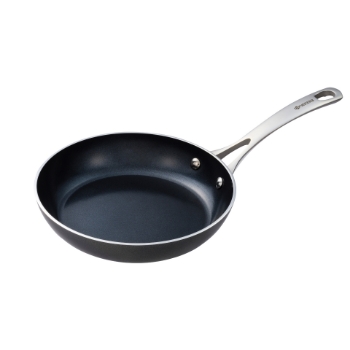
The demand for safer cookware has spurred innovation, leading to several PFAS-free coatings. Ceramic-based coatings, often called sol-gel, are the most common. Made from silicon dioxide derived from sand, they are applied in layers for a nonstick surface. Brands like GreenPan and Caraway have popularized these, emphasizing their eco-friendly and health-conscious approach.
Silicone-based coatings are another emerging technology, using polymers based on silicon and oxygen for nonstick performance. Less common than ceramic, silicone coatings are gaining traction for durability and heat resistance. However, quality and composition vary significantly between manufacturers.
Beyond ceramic and silicone, companies are exploring diamond-infused coatings for durability and scratch resistance, and coatings based on modified vegetable oils for a more sustainable alternative. These newer technologies are niche but show the effort to develop safe, effective nonstick surfaces. DI ORO, for example, emphasizes material and construction quality in its kitchen utensil lines.
The term 'PFAS-free' can be misleading. Some coatings marketed as such may contain trace amounts of PFAS from the manufacturing process. The goal is to find products completely free of intentionally added PFAS, ideally made with processes that minimize contamination.
- Ceramic (Sol-Gel): Made from silicon dioxide, offering a nonstick surface.
- Silicone-Based: Utilizing polymers for durability and heat resistance.
- Diamond-Infused: Aims for exceptional durability and scratch resistance.
- Vegetable Oil-Based: Offers a more sustainable alternative.
Performance Differences: How Do They Stack Up?
PFAS-free nonstick pans don't always match traditional Teflon performance. Teflon generally offered superior food release and required less oil. PFAS-free coatings, especially ceramic, can lose nonstick performance over time with frequent use and improper care. Many consumers accept this trade-off for health benefits but should have realistic expectations.
Teflon typically heats quickly and evenly, while ceramic coatings can be slower to respond to temperature changes, affecting cooking times and potentially leading to unevenly cooked food. Advancements in ceramic technology are improving heat distribution. Made In cookware recommends medium heat for their nonstick pans in their care guides.
Teflon was known for longevity, but PFAS-free coatings, particularly ceramic, are more susceptible to scratching and chipping, meaning they may need more frequent replacement. Proper seasoning and care can extend their lifespan. Using only wooden or silicone utensils is paramount.
Cleaning is generally easier with both types of nonstick cookware. Avoid abrasive cleaners and scouring pads with PFAS-free coatings, as they can damage the surface. Gentle handwashing with a soft sponge is recommended. Many home cooks find the benefits of PFAS-free cookware outweigh performance trade-offs.
Nonstick Coating Comparison: Performance & Characteristics (2026)
| Coating Type | Food Release | Durability | Ease of Cleaning | Heat Conductivity | Typical Price Range |
|---|---|---|---|---|---|
| Ceramic | Excellent | Fair | Excellent | Fair | Moderate |
| Silicone (Coating) | Good | Poor | Good | Poor | Low to Moderate |
| Stainless Steel with Dimpled Surface | Fair | Excellent | Fair | Good | Moderate to High |
| Cast Iron (Seasoned) | Good | Excellent | Fair | Good | Moderate |
| PTFE (Traditional Nonstick) | Excellent | Good | Excellent | Good | Low to Moderate |
| Diamond-Infused Nonstick | Excellent | Good | Excellent | Good | Moderate to High |
Illustrative comparison based on the article research brief. Verify current pricing, limits, and product details in the official docs before relying on it.
Testing & Certifications: What to Look For
Navigating 'PFAS-free' labeling can be tricky. Certifications vary in rigor and scope. A PFOA-free label indicates the absence of perfluorooctanoic acid, a specific PFAS, but not necessarily all PFAS.
More comprehensive certifications from independent testing laboratories are more reliable, often testing for a wider range of PFAS. Research the testing methodology and criteria used by each lab, as some focus solely on the finished product while others assess the manufacturing process.
There's no single, universally recognized standard for PFAS-free cookware. Regulatory bodies like the EPA are developing more stringent standards, but this is ongoing. Consumers should research products, look for reputable certifications, read independent reviews, and compare brands.
Proper Use & Care: Extending Pan Lifespan
Proper care maximizes a PFAS-free nonstick pan's lifespan. Avoid high heat, as most PFAS-free coatings aren't designed for temperatures above medium-high and excessive heat breaks them down faster. Preheat pans gradually and avoid searing or high-heat cooking.
Use wooden, silicone, or nylon utensils, as metal ones can scratch and damage the nonstick surface. Avoid abrasive cleaners and scouring pads, which compromise the coating. Gentle handwashing with a soft sponge and mild dish soap is recommended.
Proper storage prevents scratches. Avoid stacking pans directly; use pan protectors or hang them individually. If stacking, place a soft cloth or paper towel between each pan.
Don't: Use metal utensils, abrasive cleaners, high heat, or the dishwasher. Do: Use low to medium heat, gentle cleaning methods, and protective storage.
- Preheat the pan gradually on low to medium heat.
- Use wooden, silicone, or nylon utensils.
- Handwash with a soft sponge and mild dish soap.
- Avoid abrasive cleaners and scouring pads.
- Store pans with pan protectors or hang them individually.
Beyond Nonstick: Alternatives to Consider
undefined requires seasoning to maintain its nonstick properties, but with proper care, it can last for generations. Stainless steel is another versatile option, offering excellent durability and even heating.
Carbon steel is a lighter-weight alternative to cast iron, offering similar performance benefits. It also requires seasoning, but it heats up more quickly and is easier to maneuver. Enamel-coated cast iron combines the benefits of cast iron with the convenience of an easy-to-clean surface. However, the enamel coating can chip or crack over time.
The best cookware material depends on your cooking style and preferences. If you frequently cook delicate foods like eggs or fish, nonstick might still be the best choice. But for searing, browning, and high-heat cooking, cast iron or stainless steel are often superior options. Having a variety of cookware materials can give you the flexibility to tackle any recipe.
Top PFAS-Free Pans: Our Picks for 2026
Choosing the right PFAS-free pan can feel overwhelming, so here are a few top-rated options for 2026. The GreenPan Reserve Ceramic Nonstick Skillet consistently receives high marks for its excellent nonstick performance and durability. It features a ceramic coating reinforced with diamonds for added scratch resistance, and is priced around $130 for a 12-inch skillet.
The Caraway Ceramic Nonstick Fry Pan is another popular choice, known for its stylish design and easy cleanup. It’s also ceramic coated and comes in a variety of colors, typically around $99 for a 10.5-inch pan. The Scanpan Pro PFAS-Free Nonstick Skillet is a more premium option, offering exceptional heat conductivity and a durable construction, priced around $180 for a 10.25-inch skillet.
For a budget-friendly option, the T-fal Ultimate Hard Anodized Nonstick Fry Pan is a solid choice. While it’s not as durable as some of the more expensive options, it offers good nonstick performance at a reasonable price point, around $50 for a 12-inch skillet. Finally, the Made In Ceramic Non-Stick Pan is a strong contender, praised for its even heating and long-lasting nonstick properties, costing around $119 for a 10-inch pan.
- GreenPan Reserve: Ceramic with diamond reinforcement ($130/12-inch)
- Caraway: Ceramic, stylish design ($99/10.5-inch)
- Scanpan Pro: Durable, excellent heat conductivity ($180/10.25-inch)
- T-fal Ultimate: Budget-friendly, good performance ($50/12-inch)
- Made In Ceramic: Even heating, long-lasting ($119/10-inch)
What's on the Horizon? Future of Nonstick
The search for the perfect nonstick coating is ongoing. Researchers are exploring new materials and technologies, including bio-based coatings derived from renewable resources. These coatings aim to offer the same performance as traditional nonstick surfaces without the environmental and health concerns associated with PFAS.
One of the biggest challenges facing the industry is creating a coating that is both highly durable and truly PFAS-free. Many current PFAS-free coatings sacrifice some level of durability in exchange for safety. Overcoming this trade-off will require significant innovation in materials science and manufacturing processes. The future likely holds a combination of improved existing coatings and the development of entirely new technologies.

No comments yet. Be the first to share your thoughts!