
The problem with PFAS
PFAS, or per- and polyfluoroalkyl substances, are a group of man-made chemicals that have been used in a wide variety of industries and consumer products, including non-stick cookware. They’re prized for their ability to repel water and oil, which made them ideal for creating slick, easy-to-clean cooking surfaces. The initial appeal was clear: food wouldn’t stick, and cleanup was a breeze.
For decades, Teflon – a brand name for cookware coated with polytetrafluoroethylene (PTFE), a type of PFAS – was the standard. However, the manufacturing process historically involved PFOA (perfluorooctanoic acid), a particularly persistent PFAS linked to several health concerns. While PFOA has been largely phased out of Teflon production since 2013, the broader category of PFAS remains a significant topic of discussion.
PFAS exposure is linked to immune suppression and thyroid issues. A 'PFAS-free' label isn't a total safety guarantee. Many replacement chemicals are new, and we don't have long-term data on how they affect us over a decade of daily cooking.
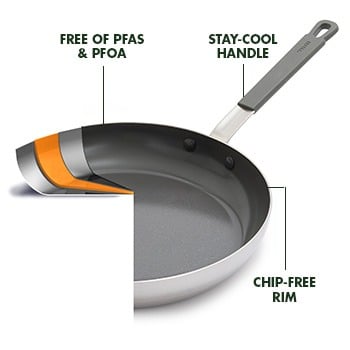
What 'PFAS-free' actually means
The 'PFAS-free' label is everywhere, but it doesn't mean the same thing to every company. Since there is no single legal standard, one brand might mean 'no PFOA' while another means 'no fluorinated chemicals at all.'
Many brands are now using alternative coatings like ceramic, silicone, and enamel as replacements for traditional PFAS-based coatings. Ceramic coatings, often marketed as "sol-gel," typically consist of sand-derived silicon. Silicone coatings offer a flexible, heat-resistant surface. Enamel, a porcelain coating applied to metal, is another option. Each has its own strengths and weaknesses.
Ceramic coatings can lose their non-stick properties relatively quickly, especially with high-heat cooking or abrasive cleaning. Silicone coatings are generally less durable than PFAS-based options and may not withstand very high temperatures. Enamel is durable but can chip or crack if subjected to sudden temperature changes. It’s essential to recognize that "PFAS-free" is a spectrum, and some alternatives may still have potential downsides in terms of durability or performance.
Some brands use 'short-chain' PFAS. They break down faster in nature, but we're still figuring out if they're actually safer for your kitchen. You have to look at the specific coating chemistry rather than trusting the box art.
- Ceramic pans use a sand-based coating that works well initially but often loses its slickness after a few months of high heat.
- Silicone is heat-resistant and flexible, though it generally wears out faster than traditional coatings.
- Enamel is a tough porcelain layer that lasts years, provided you don't drop it or shock it with cold water while it's hot.
Non-Stick Coating Comparison: Performance and Safety
| Coating Type | Durability | Ease of Cleaning | Heat Conductivity | Potential Health Concerns |
|---|---|---|---|---|
| Ceramic | Generally less durable than PTFE or enamel; susceptible to chipping and scratching with metal utensils or abrasive cleaners. Lifespan typically 1-5 years with regular use. | Excellent initial non-stick properties, making cleanup very easy. However, performance degrades over time as the coating breaks down. | Lower than stainless steel or cast iron; may not provide even heating, especially at high temperatures. Can be prone to hot spots. | Considered a safer alternative to traditional PFAS-based non-stick, but some concerns exist regarding nanoparticle release as the coating degrades. Look for certifications verifying lead and cadmium-free construction. |
| Silicone (Coating/Baking Mats) | Highly durable for baking applications, but not suitable for all stovetop cooking. Can withstand oven temperatures, but direct flame exposure is not recommended. | Very easy to clean, especially for baked goods. Food releases readily. However, can stain with certain foods. | Poor heat conductor; relies on the pan it's used on for heat transfer. Best suited for baking where even heating is less critical. | Generally considered very safe as it's an inert material. Ensure food-grade silicone is used. |
| Enamel (on Steel/Cast Iron) | Extremely durable, especially when properly cared for. Resistant to scratching and chipping, though heavy impacts can cause damage. Can last for decades. | Good non-stick properties when new, but requires seasoning (for cast iron) or careful use of fats/oils to maintain. Cleaning can require more effort than other coatings. | Moderate heat conductivity, especially with a steel core. Cast iron enamelware retains heat exceptionally well. | Generally considered safe, but potential for lead and cadmium leaching exists in lower-quality enamelware. Look for reputable brands and certifications. |
| Stainless Steel (with Dimpled Surface) | Highly durable and resistant to scratching. Can withstand high temperatures and metal utensils. Offers a long lifespan. | Requires more fat/oil for effective non-stick performance. Food can adhere more easily than with traditional non-stick coatings. Cleaning requires more effort. | Excellent heat conductivity, providing even heating. Responds quickly to temperature changes. | Considered very safe as it's a non-reactive material. No known health concerns associated with stainless steel itself. |
| PTFE (Polytetrafluoroethylene) - *Traditional Non-Stick* | Historically durable, but newer formulations are often thinner. Prone to scratching and degradation over time, reducing non-stick performance. Lifespan varies widely (2-5 years). | Excellent non-stick properties when new, making cleanup effortless. However, performance declines as the coating wears. | Moderate heat conductivity, but can be uneven with thinner pans. Not ideal for very high-heat cooking. | Historically contained PFOA, a harmful chemical. Modern PTFE cookware is PFOA-free, but concerns remain about potential release of fumes at very high temperatures (above 500°F/260°C) and the breakdown of the polymer over time. |
Illustrative comparison based on the article research brief. Verify current pricing, limits, and product details in the official docs before relying on it.
The best PFAS-free pans for 2026
The market for PFAS-free cookware is expanding rapidly, with several brands offering compelling options. Made In’s Clean Cooking Collection features a ceramic non-stick coating designed for everyday use, with a focus on even heating and durability. Their pans are constructed with a heavy-gauge aluminum body and are reported to be dishwasher safe, though hand washing is always recommended to extend the lifespan.
Dioro offers a range of non-stick cookware, emphasizing quality materials and construction. They highlight their commitment to providing cookware free from harmful chemicals, and their products are known for their even heat distribution and responsiveness. Their sets often include a variety of sizes and shapes to cover most cooking needs.
Caraway Home has gained popularity for its ceramic-coated cookware, available in a range of aesthetically pleasing colors. They emphasize a commitment to non-toxic materials and easy cleanup. Their sets typically include a frying pan, saucepan, sauté pan, and Dutch oven.
GreenPan is a long-standing player in the PFAS-free cookware space, utilizing a proprietary Thermolon ceramic non-stick coating. They offer a wide variety of products, from individual pans to complete cookware sets, at various price points. GreenPan often emphasizes the scratch resistance of their coating.
Our Place, known for its versatile "Always Pan," also offers PFAS-free options. Their cookware is designed to be multi-functional, aiming to replace several traditional pans with a single, convenient solution. The Always Pan is popular for its ease of use and cleanup.
Scanpan is a Danish brand that produces cookware with a ceramic-titanium hybrid non-stick coating. This coating is known for its exceptional durability and resistance to scratches. Scanpan cookware is generally positioned at a higher price point reflecting its quality and longevity.
How to make your pans last
Proper care is paramount for maximizing the lifespan of any non-stick cookware, but it's especially important for newer, PFAS-free options that may be less durable than traditional Teflon. Made In Cookware recommends hand washing with a soft sponge and mild detergent, avoiding abrasive cleaners or scouring pads. This helps prevent scratches and damage to the coating.
Avoid using metal utensils, which can easily scratch the non-stick surface. Opt for wooden, silicone, or nylon utensils instead. Even seemingly minor scratches can compromise the non-stick properties and potentially release particles into your food. It's a small change that makes a big difference.
While some PFAS-free cookware is dishwasher safe, hand washing is always the gentler option. High water temperatures and harsh detergents can degrade the coating over time. If you do use a dishwasher, consider placing the pan on the top rack to minimize exposure to heat and abrasive action.
When to Replace Your Existing Pans
Knowing when to retire a non-stick pan can be tricky. Visible damage, such as scratches, peeling, or blistering of the coating, is a clear sign that it’s time for a replacement. These imperfections can compromise the non-stick properties and potentially release particles into your food.
A significant loss of non-stick performance is another indicator. If food starts to stick consistently, even with proper oiling, the coating is likely breaking down. While it may still be usable for certain tasks, it’s best to replace the pan to avoid frustration and potential health concerns.
It's also important to consider the age of the pan. Even without visible damage, non-stick coatings degrade over time. Generally, a non-stick pan should be replaced every 5-8 years, depending on usage and care. This is a guideline, and frequent, high-heat cooking will shorten this lifespan.
Heat Matters: Safe Cooking Temperatures
Excessive heat is a common culprit in the premature degradation of non-stick cookware. High temperatures can cause the coating to break down, releasing fumes and compromising its non-stick properties. It’s generally recommended to avoid heating non-stick pans above 500°F (260°C).
While specific temperature limits vary depending on the coating type, a good rule of thumb is to use medium or medium-high heat for most cooking tasks. Avoid preheating an empty non-stick pan, as this can quickly reach unsafe temperatures. Always add oil or food to the pan before turning on the heat.
If you notice any smoking or unusual odors while cooking, immediately reduce the heat or remove the pan from the burner. These are signs that the coating is overheating and potentially releasing harmful fumes. Proper ventilation is also important when cooking with non-stick cookware.
Beyond Non-Stick: Alternative Cookware
For those concerned about the potential risks associated with non-stick coatings, several excellent alternatives are available. Cast iron cookware is incredibly durable and versatile, offering excellent heat retention and a naturally non-stick surface when properly seasoned. Stainless steel is another durable option, ideal for searing and browning.
Carbon steel cookware shares many of the benefits of cast iron, but it’s lighter and heats up more quickly. It requires regular seasoning to maintain its non-stick properties. Each material has its own learning curve and maintenance requirements, but they all offer viable alternatives to non-stick cookware.

No comments yet. Be the first to share your thoughts!