
Beyond Teflon: The Current State of Nonstick
Nonstick cookware has come a long way since its debut with Teflon in the 1930s. Initially hailed as a revolutionary kitchen innovation, Teflon – a brand name for PTFE (polytetrafluoroethylene) – quickly became a household staple. However, concerns emerged regarding the use of PFOA (perfluorooctanoic acid) in its manufacturing process. PFOA was linked to potential health risks, leading to its phase-out by 2015, as per agreements with the EPA.
While PFOA is largely a thing of the past in cookware production, the legacy of those concerns continues to shape the industry. The conversation has expanded beyond just PFOA and PTFE to encompass the broader category of PFAS (per- and polyfluoroalkyl substances). Today, many brands are actively marketing 'PFOA-free' or even 'PFAS-free' options, but understanding what those labels mean is crucial.
No nonstick cookware is perfect. All nonstick surfaces degrade over time and need care. This guide focuses on safer options and how to get the most out of your pans, understanding that no pan lasts forever.
PFAS Explained: What Are You Avoiding?
PFAS are man-made chemicals found in cookware, clothing, and firefighting foams. The EPA identifies over 12,000 types. They're known as 'forever chemicals' because they don't break down easily and accumulate in the environment.
The concern with PFAS stems from their potential health effects, which are still being studied. Exposure has been linked to immune deficiencies, increased cholesterol levels, and certain types of cancer, according to the National Cancer Institute. PFAS can also bioaccumulate, meaning they build up in the body over time.
PFAS can migrate into food during cooking, particularly at high temperatures or when the nonstick surface is scratched. Cooking temperature, time, food acidity, and the specific PFAS type all influence migration. While regulations have reduced certain PFAS use, understanding the risks helps in choosing cookware.
- They don't break down easily in the environment.
- Bioaccumulation: PFAS can build up in the body over time.
- Potential Health Effects: Studies have linked PFAS exposure to various health issues.
Ceramic Nonstick: The Popular Choice
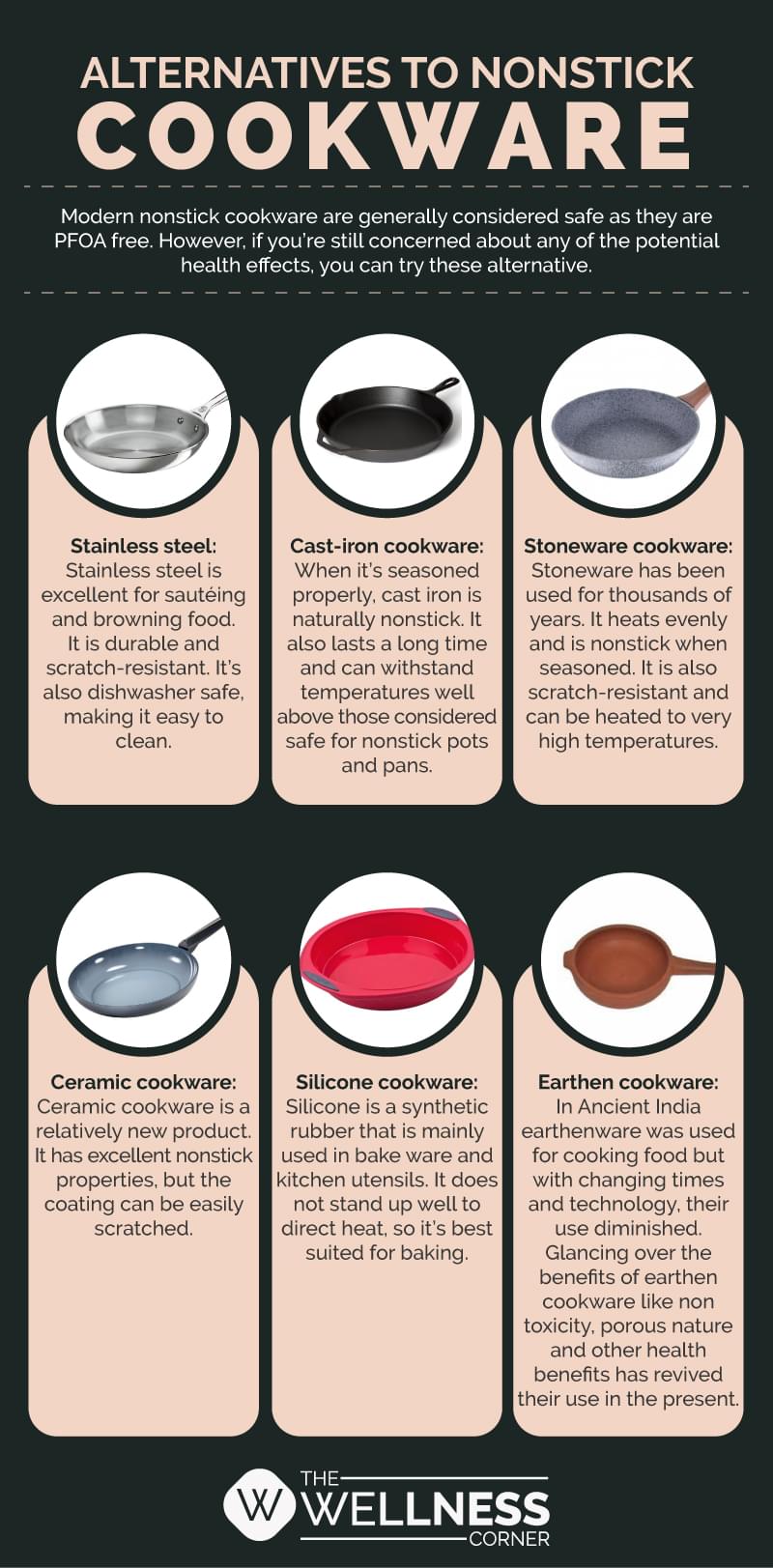
Ceramic nonstick cookware has become incredibly popular as a PFAS-free alternative. These coatings are typically made from silica – a natural mineral – and other materials, creating a hard, smooth surface. Unlike traditional Teflon, ceramic coatings don’t rely on PFAS chemistry, which is a major selling point for many consumers.
Ceramic nonstick is generally safer than traditional Teflon and often more affordable. However, these coatings are typically less durable than PTFE-based ones. They lose their nonstick properties faster, especially with high heat and abrasive cleaning.
To maximize ceramic nonstick lifespan, avoid metal utensils, abrasive cleaners, and high heat. Handwash even if the packaging claims dishwasher safety. Claims of 'ultra-durable' ceramic often don't hold up in practice. Expect to replace ceramic pans more often than other types.
Other PFAS-Free Alternatives: A Rundown
Other PFAS-free options include stainless steel cookware with dimpled or textured surfaces, such as Scanpan’s Stratanium. These dimples create air pockets, reducing food contact and sticking without synthetic coatings.
Cast iron, when properly seasoned, is another excellent nonstick alternative. Seasoning creates a natural, polymerized oil layer that prevents food from adhering. However, cast iron requires more maintenance – regular seasoning and careful cleaning are essential. Carbon steel is similar to cast iron, but lighter and heats up more quickly.
Carbon steel requires seasoning and maintenance similar to cast iron. It can react with acidic foods, affecting taste, and must be dried immediately to prevent rust. While good for high-heat cooking, it has a learning curve.
Top PFAS-Free Pans: 2026 Recommendations
Choosing a PFAS-free pan depends on your budget, cooking style, and priorities. Here are recommendations for 2026, covering different materials and price points. Availability and pricing may change.
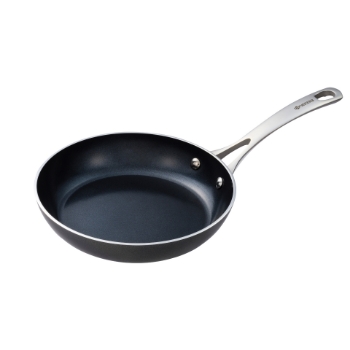
GreenPan Reserve Ceramic Nonstick Fry Pan (12-inch, around $100): GreenPan is a well-known brand in the ceramic nonstick space. The Reserve line offers a durable ceramic coating and a comfortable handle. It's a good all-around option for everyday cooking, but the coating will eventually wear down with use.
Caraway Home Ceramic Nonstick Fry Pan (10.5-inch, around $90): Caraway pans are popular for their stylish design and non-toxic ceramic coating. They're oven-safe up to 550°F and come in a variety of colors. However, some users report that the nonstick performance diminishes relatively quickly.
Made In Stainless Clad Fry Pan (12-inch, around $170): While not nonstick in the traditional sense, Made In’s stainless clad cookware offers excellent heat retention and even cooking. With proper technique, you can achieve surprisingly good nonstick results, especially with fats like butter or oil.
Lodge Cast Iron Skillet (12-inch, around $30): A classic for a reason! Lodge cast iron skillets are incredibly durable and versatile. They require seasoning, but with proper care, they’ll last a lifetime. Perfect for searing, frying, and baking.
Scanpan Stratanium Nonstick Fry Pan (10.25-inch, around $180): Scanpan's Stratanium surface is a dimpled stainless steel that creates a naturally nonstick surface without PFAS. It’s a more expensive option, but it’s exceptionally durable and oven-safe up to 500°F.
Ouray Sportswear Carbon Steel Fry Pan (10-inch, around $60): A good entry point into carbon steel, Ouray Sportswear offers a pre-seasoned pan that’s lightweight and responsive. It requires ongoing seasoning, but it’s a great option for high-heat cooking.
- Price Range: Varies significantly depending on material and brand.
- Durability: Ceramic is generally less durable than stainless steel or cast iron.
- Maintenance: Cast iron and carbon steel require regular seasoning.
Recommended PFAS-Free Non-Stick Cookware (2026)
| Brand | Material | Price Range | Durability | Ease of Cleaning | Best For |
|---|---|---|---|---|---|
| GreenPan | Thermolon Ceramic Nonstick | Medium | Medium | High | Eggs 🍳, delicate fish, sauces |
| Caraway | Ceramic Nonstick | Medium-High | Medium | High | Everyday cooking, vegetables, omelets |
| Our Place | Ceramic Nonstick | Medium | Medium | High | Sautéing, steaming, frying – versatile! ✨ |
| Scanpan | Ceramic-Titanium Nonstick | High | High | Medium | Searing, high-heat cooking, all-purpose |
| All-Clad | Ceramic Nonstick | High | High | Medium | Professional-level cooking, even heating |
| OXO | Ceramic Nonstick | Medium | Medium | High | Pancakes, eggs, and general everyday use |
| Blue Diamond | Diamond-Infused Ceramic Nonstick | Low-Medium | Medium | High | Budget-friendly option, eggs, and simple meals |
Illustrative comparison based on the article research brief. Verify current pricing, limits, and product details in the official docs before relying on it.
Maximizing Nonstick Lifespan: Care & Usage
Proper care extends nonstick cookware life, especially ceramic. Use silicone, wood, or nylon utensils, not metal, to avoid scratching. Clean with a soft sponge, cloth, and mild dish soap. Avoid abrasive cleaners.
Control temperature carefully. High heat damages nonstick coatings, accelerating degradation. Use medium or medium-low heat for most cooking. Avoid overheating, even when empty. Some pans have heat indicators.
Handwashing is best, even if pans are labeled dishwasher-safe. Harsh detergents and high heat can damage the coating. Avoid stacking pans directly; use protectors or hang them to prevent scratches.
Decoding Marketing Claims: What to Watch For
Marketing language can mislead. Terms like 'eco-friendly' and 'sustainable' lack clear definitions and can be used for greenwashing. 'PFOA-free' means PFOA wasn't used in manufacturing, not necessarily that the pan is PFAS-free.
Be cautious of 'lifetime guarantee' or 'ultra-durable' claims, which are often exaggerated. Read warranties carefully. Independent certifications can be unreliable; no universally recognized PFAS-free cookware certification exists.
Research thoroughly to make informed decisions. Read reviews from multiple sources, compare products, and understand materials. Look for evidence-based information beyond marketing claims.
Future Trends in Nonstick Technology
The search for truly safe and durable nonstick alternatives is ongoing. Researchers are exploring new ceramic formulations, including those with enhanced durability and improved nonstick properties. Alternative coatings, such as those based on silicones or other polymers, are also being investigated.
There’s also growing interest in surface treatments that create a naturally nonstick effect without relying on synthetic coatings. These include techniques like laser etching and plasma treatment. Ongoing research is focused on identifying and developing PFAS alternatives that are both effective and environmentally friendly.
While it’s difficult to predict the future with certainty, it’s likely that we’ll see continued innovation in the nonstick cookware space. The demand for safer and more sustainable options is driving the development of new technologies and materials.
- New ceramic formulations
- Alternative polymer coatings
- Surface treatments for natural nonstick

No comments yet. Be the first to share your thoughts!