
Beyond 'Done': Why a Thermometer Matters
Undercooking food can lead to serious illness. The USDA estimates that foodborne illness affects 48 million Americans annually, causing 128,000 hospitalizations and 3,000 deaths. A digital cooking thermometer helps prevent this.
Overcooking also ruins food's texture and flavor. A well-done steak loses its tenderness, and dry chicken is a common disappointment. Relying on visual cues or timing alone is unreliable.
Internal temperature is the only reliable indicator of doneness and safety. A digital cooking thermometer removes the guesswork. This guide covers instant-read, probe, and infrared thermometers to help you choose the right tool.
Many cooks still rely on poking, prodding, and hoping for the best. This is a risky approach. Investing in a good thermometer protects your health and the health of those you cook for.
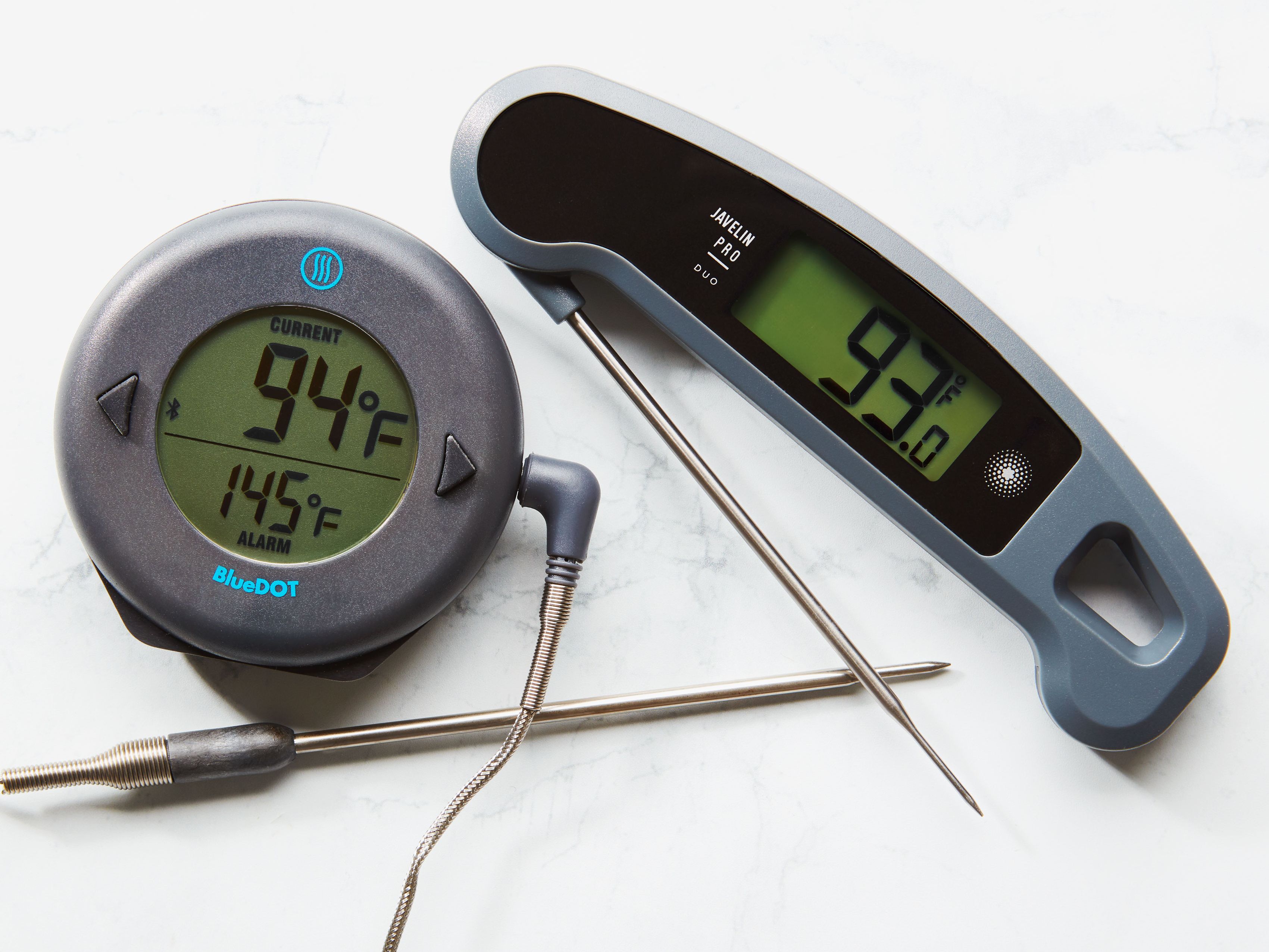
Instant-Read: Speed and Simplicity
For quick temperature checks, an instant-read thermometer is ideal. These are affordable, easy to use, and fast, delivering readings in 2-5 seconds. They are perfect for spot-checking steaks, burgers, or poultry near the end of cooking. The ThermoPro TP19H is a reliable option.
These thermometers use either a thermocouple or a thermistor. Thermocouples measure temperature via voltage between two metals, while thermistors change resistance with temperature. Thermocouples typically have a wider temperature range. Both use a sensor to display the temperature digitally.
Instant-read thermometers aren't for continuous monitoring. You must open the oven or grill to take a reading, losing heat. They should not be left in food while cooking and aren't ideal for tracking temperature changes in large cuts of meat over time.
Calibration is important for instant-read thermometers. They can become inaccurate over time. An ice bath test (submerging the probe in ice water and checking for a 32°F/0°C reading) reveals if calibration is needed. Many models have a calibration knob.
Probe Thermometers: Cooking Without Watching
For hands-off cooking and precise temperature control, use a probe thermometer. Unlike instant-read models, a probe thermometer stays in the food during cooking, connected to a base unit that displays the temperature. This lets you monitor internal temperature without opening the oven or grill, maintaining consistent heat.
The benefits are significant. You can set alarms for target temperatures, ensuring your food is cooked to perfection without constant vigilance. Many models also offer remote monitoring via Bluetooth or Wi-Fi, letting you check the temperature from your smartphone. This is especially useful for slow-cooking or smoking.
Probe thermometers are either wired or wireless. Wired probes are more affordable but can be cumbersome. Wireless probes offer more freedom but need batteries. The Virginia Department of Agriculture and Consumer Services (VDACS) notes that probe diameter is important for thin foods; a smaller probe causes less damage and gives a more accurate reading.
Probe thermometers have a slower response time than instant-read models. Wired probes can have cord issues, and wireless probes need regular battery changes. Probe material also affects response time; stainless steel is common, but some higher-end models use more responsive materials.
When selecting a probe thermometer, consider probe length and diameter. A longer probe suits larger cuts of meat, while a thinner probe is better for delicate items like fish fillets. Check the temperature range and accuracy specifications.
Infrared: The Non-Contact Option
Infrared thermometers measure surface temperature without physical contact. They are ideal for quickly checking grill grates before cooking, assessing the surface temperature of liquids like simmering sauces, or identifying cold spots in a refrigerator.
Infrared thermometers only measure surface temperature, not internal temperature. They cannot determine if a steak is medium-rare, only its surface heat. They can also be inaccurate with shiny or dark surfaces, which reflect infrared radiation differently.
Infrared thermometers are not a replacement for probe or instant-read thermometers, but they are a handy kitchen tool for quick checks, not definitive doneness measures. They are good for ensuring a grill is at the correct temperature before cooking but should not be relied upon for determining if a roast chicken is safe to eat.
Accuracy & Calibration: Getting Reliable Readings
A thermometer's accuracy is crucial. Most digital thermometers claim an accuracy of ±2°F (±1°C)
Calibration involves verifying the thermometer's reading against a known standard – in this case, the freezing point of water. If the reading is off, many models have a calibration adjustment screw or button. Some thermometers may also require recalibration over time, so it’s a good practice to check periodically.
Potential sources of error include probe placement – ensure the probe is inserted into the thickest part of the food, avoiding bone – and low battery life. A weak battery can lead to inaccurate readings. Always use fresh batteries and replace them regularly. Also, be mindful of the material of the probe itself; some materials are more prone to temperature fluctuations than others.
2026 Thermometer Standouts: Our Top Picks
The market is flooded with cooking thermometers, so choosing the right one can be overwhelming. Here are a few standouts based on performance, features, and value, as of late 2026. These are available on Amazon.
ThermoPro TP19H Digital Instant Read Thermometer ($28): A consistently reliable instant-read option. It boasts a 2-3 second response time, a backlit display, and a waterproof design. Pros: Fast, accurate, affordable. Cons: No probe function. Temperature Range: -58°F to 572°F (-50°C to 300°C). Accuracy: ±0.9°F.
MEATER Plus Wireless Smart Meat Thermometer ($199): A premium wireless probe thermometer with a long range (up to 165 feet) and advanced features like estimated cooking time. Pros: Wireless, remote monitoring, accurate. Cons: Expensive. Temperature Range: 5°F to 212°F (0°C to 100°C). Accuracy: ±1.3°F.
Weber 7447501 Original Instant-Read Thermometer ($25): A solid, dependable instant-read option from a trusted grilling brand. Pros: Durable, easy to use, affordable. Cons: Basic features. Temperature Range: 0°F to 225°F (-18°C to 107°C). Accuracy: ±2°F.
Kizen Digital Meat Thermometer ($22): A budget-friendly instant-read with a surprisingly fast response time and a clear display. Pros: Affordable, fast, accurate. Cons: Less durable than higher-end models. Temperature Range: -58°F to 572°F (-50°C to 300°C). Accuracy: ±1°F.
Etekcity Food Thermometer 706 ($17): A basic, reliable instant-read thermometer that gets the job done. It's a great option for beginners or those who don't need a lot of bells and whistles. Pros: Very affordable, simple to use. Cons: Slower response time than some models. Temperature Range: -58°F to 572°F (-50°C to 300°C). Accuracy: ±1.4°F.
IRKLE Infrared Thermometer ($30): A good entry-level infrared thermometer for checking surface temperatures. Pros: Non-contact, quick readings. Cons: Only measures surface temperature. Temperature Range: -58°F to 716°F (-50°C to 380°C). Accuracy: ±1%.
Featured Products

Instant read in 3-4 seconds · Waterproof design for easy cleaning · Ambidextrous backlit display for low-light use
This budget-friendly instant-read thermometer is perfect for quick temperature checks and is built to withstand kitchen messes.

Ultra-fast 2-second read time · Auto-rotating backlit display · IP65 water and dust resistant
For serious cooks who demand speed and accuracy, the Javelin PRO offers professional-grade performance in a durable, easy-to-use package.
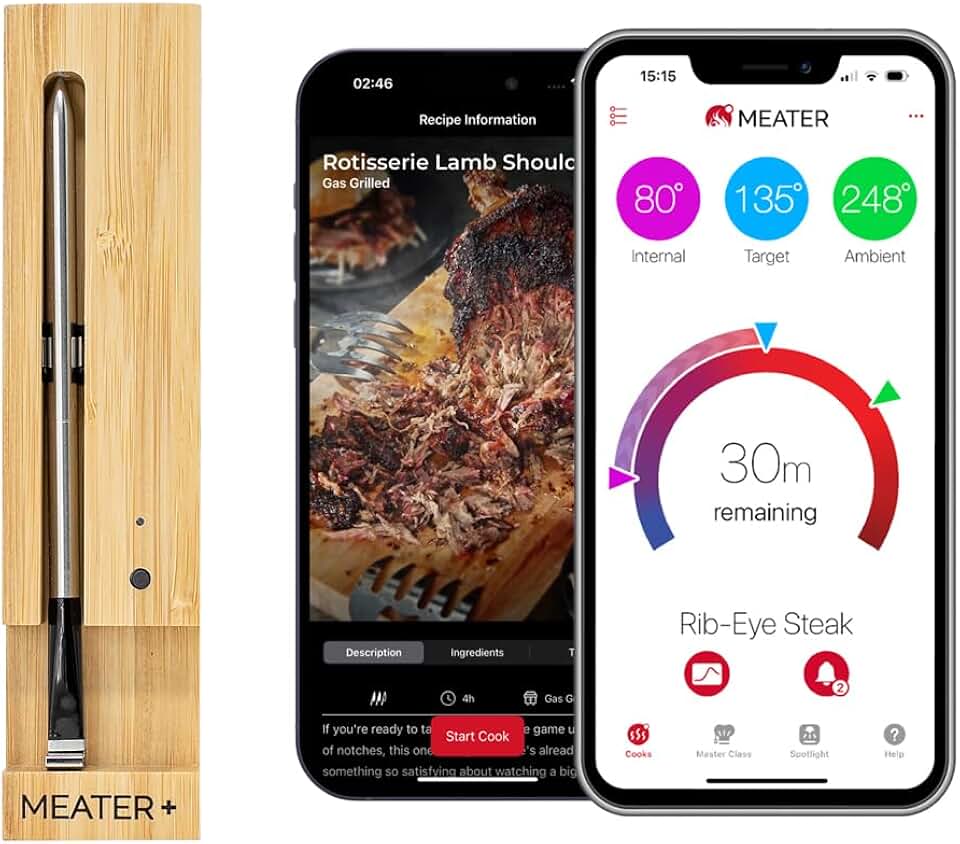
Completely wireless design with Bluetooth · Dual sensors for ambient and internal temperature · Guided cooking and app integration
The MEATER Plus takes the guesswork out of cooking with its smart technology, allowing you to monitor your food remotely and achieve perfect results every time.
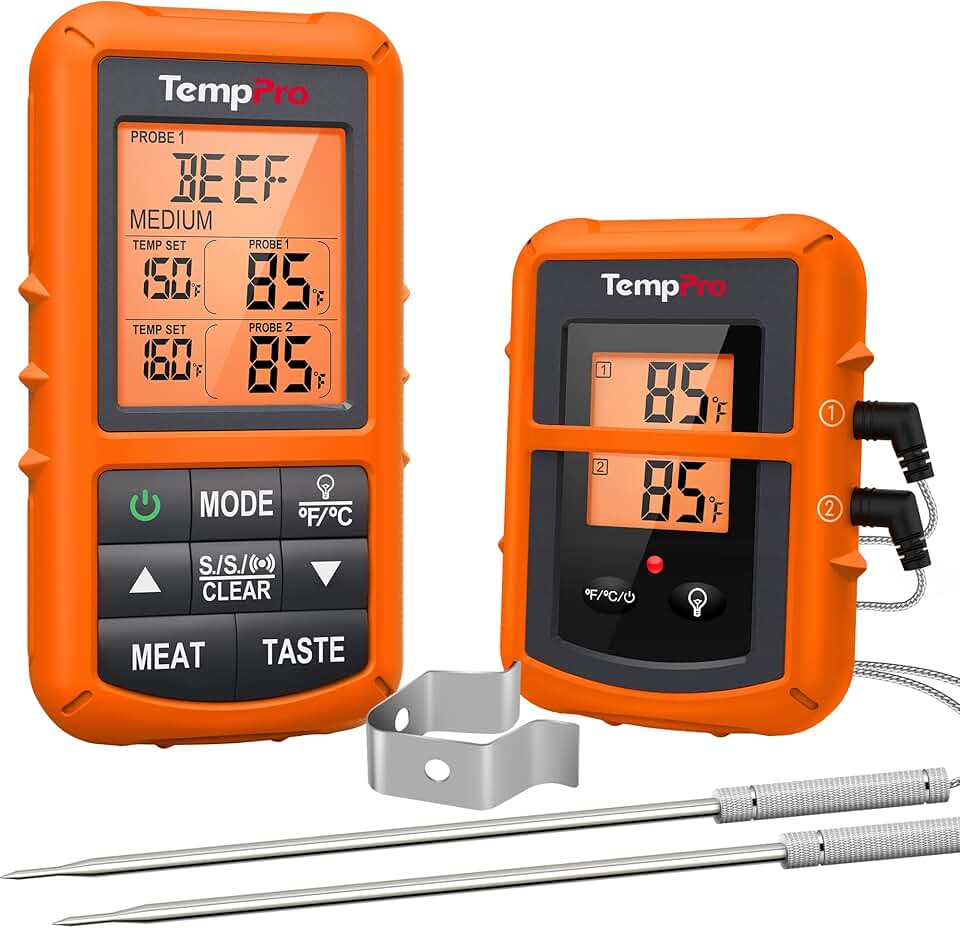
Long 500ft wireless range · Dual probes for monitoring two dishes simultaneously · High-temperature alarm and timer
This wireless probe thermometer is ideal for smokers and grills, letting you keep an eye on your food's temperature from a distance without opening the lid.

Non-contact surface temperature measurement · Adjustable emissivity for different materials · Max temperature hold function
The Etekcity infrared thermometer is great for checking surface temperatures of griddles, ovens, or even refrigerators without touching them.
As an Amazon Associate I earn from qualifying purchases. Prices may vary.
Cleaning & Care: Keeping it Accurate
Proper cleaning and care are essential for maintaining the accuracy and longevity of your thermometer. For instant-read thermometers, hand wash the probe with warm, soapy water after each use. Avoid immersing the entire unit in water. Probe thermometers also require regular cleaning. Some probes are dishwasher safe, but always check the manufacturer's instructions before placing them in the dishwasher.
Store your thermometer in a safe place to prevent damage. Avoid dropping it or exposing it to extreme temperatures. Replace batteries regularly to ensure accurate readings. For more information on food thermometer safety, refer to the USDA guidance:

No comments yet. Be the first to share your thoughts!