
The Professional Cook's Knife
A good chef’s knife isn’t just a kitchen tool, it’s an extension of your hand. For a home cook, a knife might be used a few times a week for basic tasks. But for a professional, it’s used constantly – hours every single day for everything from mincing shallots to breaking down whole chickens. That difference in usage demands a different level of quality and durability.
The price tag on a professional-grade knife can feel daunting, but it’s truly an investment. Cheaper knives dull quickly, require more effort to use, and often don’t hold an edge well. This leads to fatigue and, frankly, less enjoyable cooking. A well-made knife, on the other hand, will last for years – even decades – with proper care.
Several factors go into making a truly professional chef's knife. Steel quality is paramount; we're looking for materials that can take and hold a sharp edge. Construction is also key, with a 'full tang' (where the metal extends the full length of the handle) being significantly more durable than a 'partial tang.' Finally, balance is crucial – a knife should feel comfortable and controlled in your hand, not too heavy or too light.
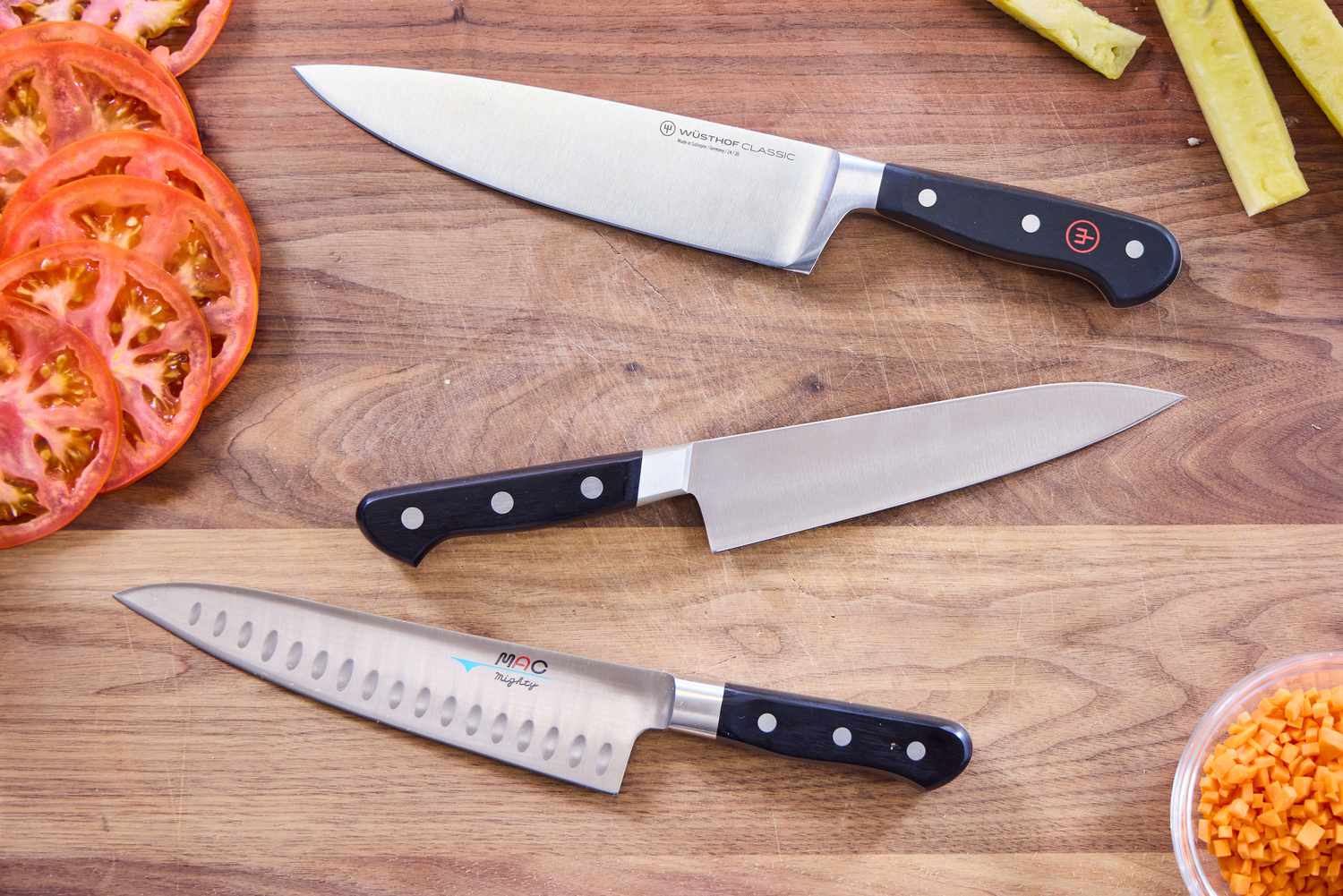
Our Testing Process: What Chefs Look For
To compile this list of the best kitchen knives for 2026, we focused on what knives professionals actually rely on daily. We consulted with chefs, including Chef Julie Yoon, and put each knife through rigorous testing.
We started with basic sharpness tests, like the paper test (how cleanly it cuts paper) and the tomato test (how easily it slices through skin without crushing). But that's just the beginning. We also evaluated edge retention by performing repetitive cutting tasks and then retesting sharpness. Balance and comfort were assessed through extended use, and durability was tested by looking at the steel’s resistance to chipping and bending.
Beyond the technical aspects, we also considered the overall 'feel' of each knife. As Chef Julie Yoon points out in her guide, a knife needs to feel like an extension of your hand. That’s a subjective element, of course, but it’s one that professional cooks prioritize. Ultimately, a 'good' knife isn't just about specs; it's about how it performs in a real-world kitchen environment.
The Top 15 Chef's Knives of 2026
Here are the 15 chef’s knives that consistently earn high marks from professional cooks, based on our testing and expert feedback. Prices are approximate.
1. Shun Classic 8-Inch Chef’s Knife: ($180) Shun knives are known for their beautiful Damascus steel and incredibly sharp edges. The VG-MAX steel core holds an edge well, and the PakkaWood handle is comfortable to grip. Some chefs find the thin blade a little fragile for heavy-duty tasks.
2. Wüsthof Classic 8-Inch Chef’s Knife: ($200) A workhorse of the professional kitchen, the Wüsthof Classic is renowned for its durability and balance. The high-carbon stainless steel is easy to maintain, and the full tang provides excellent stability. It’s not the sharpest knife out of the box, but it’s a reliable performer.
3. Global G-2 8-Inch Chef’s Knife: ($160) The Global G-2 is instantly recognizable for its all-metal construction and unique design. The CROMOVA 18 stainless steel is exceptionally sharp and resistant to corrosion. The handle can be slippery when wet, which is a common complaint.
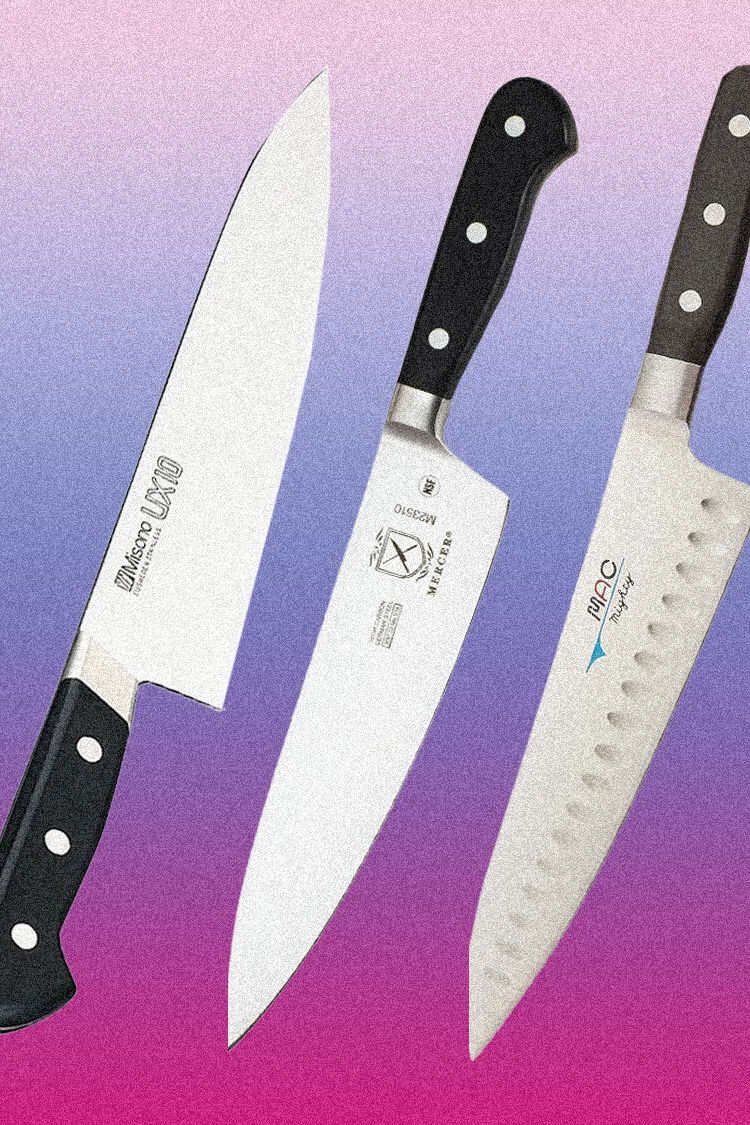
4. Mac Knife Professional Hollow Edge 8-Inch Chef’s Knife: ($150) Mac knives offer an excellent balance of sharpness, durability, and affordability. The high-carbon molybdenum vanadium steel holds an edge well, and the hollow edge reduces drag when cutting. The thin blade requires a bit more care to avoid chipping.
5. Miyabi Birchwood 8-Inch Chef’s Knife: ($250) Miyabi knives are known for their stunning craftsmanship and exceptional sharpness. The VG-10 steel core is incredibly hard, and the birchwood handle is both beautiful and comfortable. These knives require more maintenance to prevent rust.
6. Victorinox Fibrox Pro 8-Inch Chef’s Knife: ($40) Don't let the low price fool you – this knife is a favorite of many professional cooks. The Fibrox Pro is incredibly durable, easy to sharpen, and provides a surprisingly comfortable grip. It's not the prettiest knife, but it gets the job done.
7. Tojiro DP Gyuto 8.2-Inch: ($100) Tojiro knives offer incredible value for the price. The VG-10 steel core provides excellent sharpness and edge retention, and the laminated stainless steel cladding protects against corrosion. It’s a great option for cooks who are looking for a high-performance knife without breaking the bank.
8. Messermeister Meridian Elite 8-Inch Chef’s Knife: ($180) Messermeister knives are known for their German engineering and exceptional quality. The forged high-carbon stainless steel blade holds an edge well, and the full tang provides excellent balance. The handle is comfortable and ergonomic.
9. Zwilling J.A. Henckels Professional “S” 8-Inch Chef’s Knife: ($170) Another German classic, the Zwilling J.A. Henckels Professional “S” is a durable and reliable workhorse. The special formula stainless steel is resistant to corrosion and easy to sharpen. It’s a solid all-around performer.
10. Chroma 301 8-Inch Chef's Knife: ($130) Chroma knives are known for their sleek, modern design and high-performance steel. The 301 stainless steel is exceptionally sharp and resistant to staining. The handle is comfortable and ergonomic.
11. Shun Sora 8-Inch Chef's Knife: ($140) A more affordable entry point into the Shun family, the Sora still delivers impressive sharpness and performance. It uses a different steel than the Classic line, but it's still a very capable knife.
12. Misono Swedish Steel 8-Inch Chef’s Knife: ($220) Misono knives are highly sought after by professional chefs for their exceptional sharpness and edge retention. The Swedish stainless steel is incredibly hard, but it also requires more care to prevent rust.
13. Fujiwara Kanefusa FKM Series 8-Inch Chef’s Knife: ($120) Fujiwara Kanefusa knives are known for their traditional Japanese craftsmanship and exceptional value. The high-carbon stainless steel blade is incredibly sharp and durable.
14. Mercer Culinary Millennia 8-Inch Chef’s Knife: ($25) Similar to the Victorinox, the Mercer Millennia is a budget-friendly option that still delivers solid performance. It's a great choice for students or cooks who are just starting out.
15. Sakai Takayuki Grand Chef SP Type II 8.2-Inch Gyuto: ($200) Sakai Takayuki knives are made by skilled artisans in Japan. This knife features a Swedish stainless steel core and a beautiful hammered finish.
Steel Types Explained
The type of steel used in a chef’s knife significantly impacts its performance. High-carbon stainless steel is the most common choice, offering a good balance of sharpness, edge retention, and corrosion resistance. It’s relatively easy to sharpen and maintain. Wüsthof and Zwilling J.A. Henckels often use this type of steel.
Carbon steel is known for its exceptional sharpness and ease of sharpening, but it’s also prone to rust and corrosion. It requires more diligent maintenance, including regular oiling. Many traditional Japanese knives are made from carbon steel. Damascus steel isn’t a specific type of steel, but rather a technique of layering different steels to create a beautiful and durable blade. Shun knives are a prime example.
VG-10 is a popular Japanese stainless steel known for its hardness and edge retention. It's often found in knives from Shun and Miyabi. CROMOVA 18 is another Japanese stainless steel, offering good corrosion resistance and sharpness, and is used in Global knives. Choosing the right steel depends on your priorities – sharpness, durability, or ease of maintenance.
- High-carbon stainless steel: Balances sharpness, durability, and corrosion resistance. Easy to sharpen and maintain.
- Carbon steel: Exceptional sharpness, but requires more maintenance due to rust and corrosion.
- Damascus steel: Created by layering different steels for a beautiful and durable blade.
- VG-10: A hard Japanese stainless steel known for its edge retention.
- CROMOVA 18: A Japanese stainless steel offering good corrosion resistance and sharpness.
Common Kitchen Knife Steel Types: A Comparison
| Steel Type | Characteristics | Strengths | Considerations |
|---|---|---|---|
| High-Carbon Stainless Steel | Balances hardness with stain resistance 🛡️ | Holds a good edge and is relatively easy to maintain. | Can still stain or corrode if not properly cared for. |
| Carbon Steel | Known for exceptional sharpness and ease of sharpening ✨ | Favored by professionals for its ability to take a very fine edge. | Requires diligent care to prevent rust and corrosion; not dishwasher safe. |
| VG-10 Steel | A popular Japanese stainless steel with added vanadium for toughness 💪 | Offers a good combination of sharpness, edge retention, and corrosion resistance. | Generally requires more specialized sharpening tools. |
| AUS-8 Steel | A widely used Japanese stainless steel, known for affordability 💰 | Good all-around performance and relatively easy to sharpen. | Edge retention is not as high as some premium steels. |
| S30V Steel | A premium stainless steel with high vanadium content for wear resistance 💎 | Excellent edge retention and good corrosion resistance. | Can be more difficult to sharpen than some other steels. |
| Damascus Steel | Visually striking layered steel, often combining different steels 🌸 | Offers a unique aesthetic and can combine the benefits of multiple steel types. | Performance varies greatly depending on the steels used in the layering process; can be expensive. |
Qualitative comparison based on the article research brief. Confirm current product details in the official docs before making implementation choices.
Handle Materials: Comfort and Grip
The handle of a chef’s knife is just as important as the blade. Wood handles (like Pakkawood or rosewood) are aesthetically pleasing and offer a comfortable, natural grip. However, they require more maintenance to prevent cracking and warping. Synthetic materials (like Micarta or G-10) are more durable and resistant to moisture, making them a good choice for professional kitchens.
Composite materials offer a balance of comfort and durability. Fibrox, used on the Victorinox Fibrox Pro, is a popular example. The shape and ergonomics of the handle also play a crucial role. A well-designed handle will fit comfortably in your hand and provide a secure grip, even when wet. It’s worth trying out different handle shapes to find what feels best for you.
Ultimately, the best handle material is a matter of personal preference. Some cooks prioritize aesthetics, while others prioritize durability and low maintenance. Consider how you’ll be using the knife and choose a handle that suits your needs.
Knife Maintenance: Keeping Your Edge
Even the best chef’s knife will eventually lose its edge. Regular maintenance is essential for keeping your knife performing at its best. Honing and sharpening are often used interchangeably, but they’re actually two different processes. Honing realigns the blade’s edge, while sharpening removes metal to create a new edge.
You should hone your knife before each use to maintain its sharpness. A honing steel doesn’t actually sharpen the knife, but it helps to keep the edge aligned. Sharpening should be done less frequently, depending on how often you use your knife. Whetstones are the traditional method for sharpening knives, but electric sharpeners can also be effective.
Proper storage is also important. Avoid storing your knives loose in a drawer, as this can damage the blade. Use a knife block, magnetic knife strip, or blade guards to protect your investment. Remember to always handle knives with care and follow safety precautions when sharpening or honing.
- Honing: Realignment of the blade's edge (perform before each use).
- Sharpening: Removal of metal to create a new edge (as needed, less frequent than honing).
- Storage: Use a knife block, magnetic strip, or blade guards to protect blades.
Standouts: Knives Worth a Second Look
While the knives listed above represent the best of the best, a few stand out for offering exceptional value or unique features. The Victorinox Fibrox Pro consistently impresses with its affordability and durability – it’s a fantastic option for beginners or anyone on a budget.
For cooks who frequently break down poultry, the Shun Classic Boning Knife is a game-changer. Its flexible blade allows for precise and effortless cuts. And for those seeking a beautifully crafted knife with exceptional sharpness, the Miyabi Birchwood is worth the splurge.
These knives didn't quite make the very top tier, but they offer compelling combinations of performance, features, and price. They're excellent choices for cooks who have specific needs or preferences.
Where Chefs Buy Their Knives
Professional cooks typically purchase their knives from a variety of sources. Online retailers like Amazon and Williams Sonoma offer a wide selection and competitive prices. Restaurant supply stores often carry professional-grade knives at wholesale prices. And some chefs prefer to buy directly from manufacturers to get customized knives or exclusive deals.
Many restaurant supply stores offer discounts to chefs with verifiable credentials. It’s always worth asking if you qualify for a professional discount. Websites like WebstaurantStore are also popular resources for professional cooks.

No comments yet. Be the first to share your thoughts!