
The state of kitchen knives in 2026
The kitchen knife market is changing. It’s no longer just about stainless steel and a comfortable handle. We’re seeing a real emphasis on material science – different alloys, coatings, and even powder metallurgy are becoming more common. This isn’t just marketing hype; these advancements are translating to knives that hold an edge longer and are more resistant to corrosion.
Handle ergonomics are also getting a lot of attention. Manufacturers are realizing that a knife needs to feel good in your hand, especially if you’re doing a lot of prep work. We’re seeing more contoured handles, different materials designed for specific grips, and even options for left-handed cooks. It’s a welcome shift.
Direct-to-consumer brands have disrupted the market, offering high-quality knives at more accessible price points. This has forced established brands to step up their game, and ultimately, it’s benefiting the home cook. What’s particularly interesting is how much influence professional chefs now have on home cook preferences. Chefs are very vocal about their tools, and their recommendations carry weight.
The knives coming out now are a clear step up in quality and design from even five years ago. While the variety is wider, the core choice still comes down to how much weight you want to feel in your hand and how much time you'll spend on maintenance.
The best chef's knives right now
The chef’s knife is the workhorse of the kitchen, and finding the right one is paramount. Based on extensive testing by Bon Appétit in 2026 and recommendations from America's Test Kitchen, here’s a rundown of the top contenders. It’s not about finding the perfect knife, but the one that best suits your cooking style and budget.
At the top of the heap is the Shun Classic 8-inch Chef’s Knife. This knife, consistently praised by Bon Appétit, features a VG-MAX steel core clad in Damascus stainless steel. It’s incredibly sharp, holds its edge well, and is surprisingly lightweight (around 6.2 ounces). The pakkawood handle is comfortable, but can require occasional oiling. Price: around $220.
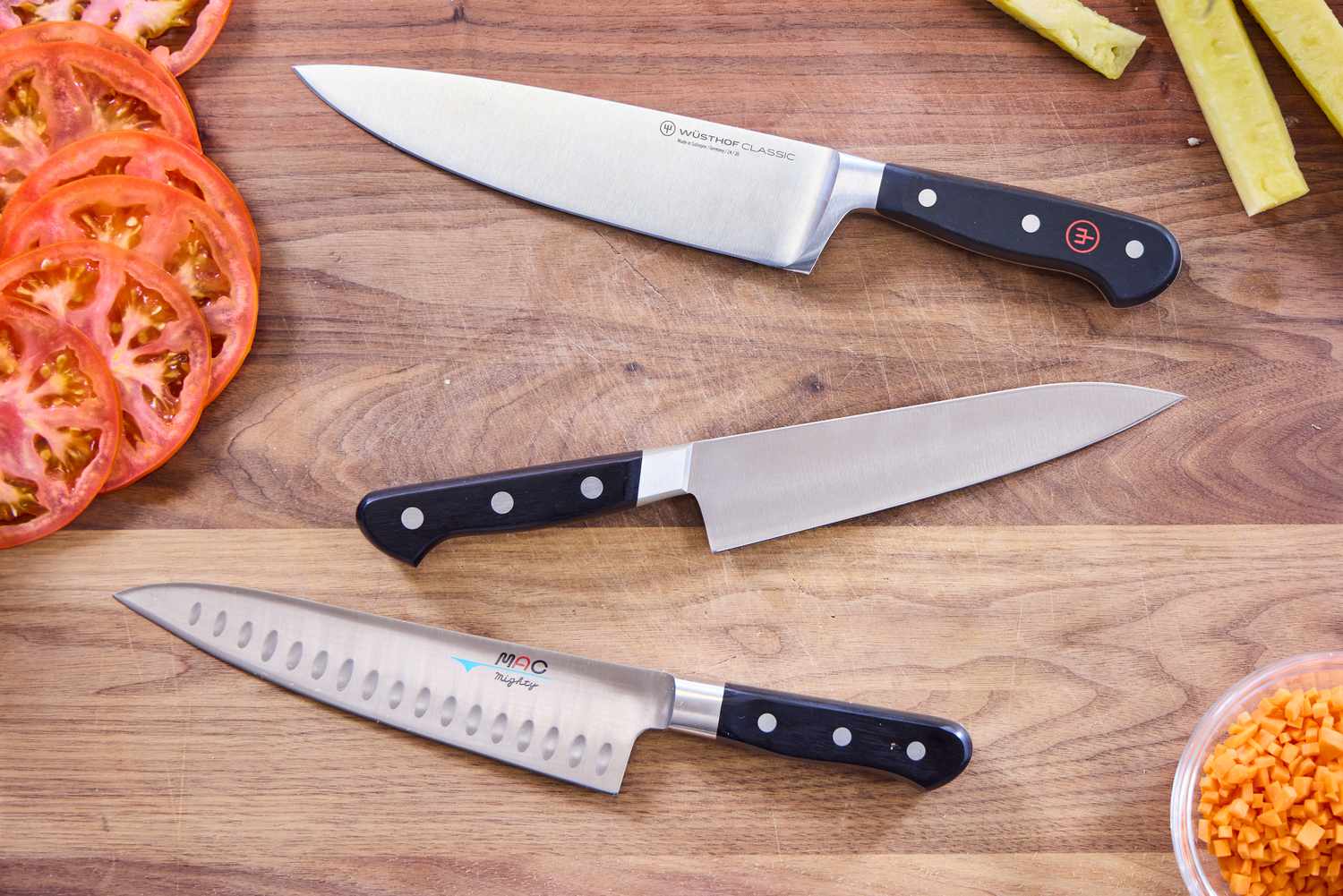
Next up is the Wüsthof Classic 8-inch Chef’s Knife. A perennial favorite, Wüsthof’s Classic line is known for its durability and balance. It’s made from high-carbon stainless steel and has a full bolster, providing excellent control. It’s heavier than the Shun (around 10.4 ounces) and requires more maintenance, but it’s built to last. Price: around $200.
For those seeking a more affordable option, the Victorinox Fibrox Pro 8-inch Chef’s Knife is a standout. America’s Test Kitchen consistently recommends this knife for its exceptional value. It’s made from a tough, high-carbon stainless steel and has a comfortable, non-slip Fibrox handle. It’s not as refined as the Shun or Wüsthof, but it performs admirably. Price: around $40.
The Global G-2 8-inch Chef’s Knife is a unique option. Its all-metal construction (CROMOVA 18 stainless steel) and distinctive dimpled handle make it instantly recognizable. It’s lightweight, incredibly sharp, and easy to clean. Some find the handle uncomfortable, but many appreciate its minimalist design. Price: around $150.
Rounding out the top five is the Mac Mighty 8-inch Chef’s Knife. This knife is known for its exceptional sharpness and edge retention, thanks to its high-carbon molybdenum vanadium steel. It’s lightweight and well-balanced, making it a joy to use. The handle is simple but comfortable. Price: around $180.
- The Shun Classic 8-inch uses a VG-MAX core with Damascus cladding. It weighs 6.2 oz and costs about $220.
- Wüsthof Classic 8-inch: High-carbon stainless steel, full bolster, 10.4 oz, $200
- Victorinox Fibrox Pro 8-inch: High-carbon stainless steel, Fibrox handle, value pick, $40
- Global G-2 8-inch: CROMOVA 18 steel, all-metal construction, $150
- Mac Mighty 8-inch: High-carbon molybdenum vanadium steel, lightweight, $180
Chef's Knife Comparison – 2026
| Brand | Model | Steel Type | Handle Material | Best For |
|---|---|---|---|---|
| Wüsthof | Classic 8-Inch Chef's Knife | X50CrMoV15 | Synthetic Material (DuraPoly) | All-Around Use, Durability |
| Shun | Classic 8-Inch Chef's Knife | VG-MAX | PakkaWood | Precision Work, Aesthetics |
| Global | G-2 8-Inch Chef's Knife | CROMOVA 18 Stainless Steel | Stainless Steel | Modern Style, Lightweight Feel |
| Victorinox | Fibrox Pro 8-Inch Chef's Knife | Stainless Steel | Fibrox (Thermoplastic Elastomer) | Budget-Friendly, High-Volume Tasks |
| MAC Knife | Professional Hollow Edge 8-Inch Chef's Knife | High-Carbon Molybdenum Vanadium Steel | PakkaWood | Thin Blade, Delicate Slicing |
| Tojiro | DP Gyuto 8.2-Inch Chef's Knife | VG-10 Stainless Steel | Laminated Wood | Excellent Value, Japanese Craftsmanship |
Qualitative comparison based on the article research brief. Confirm current product details in the official docs before making implementation choices.
Paring and serrated knives
America’s Test Kitchen is right: three knives cover most kitchen tasks. Beyond the chef’s knife, a paring knife and a serrated knife are essential. A paring knife (around 3-4 inches) is perfect for detail work – peeling fruits and vegetables, trimming meats, and deveining shrimp. I recommend the Wüsthof Pro Light Paring Knife; it’s incredibly sharp and comfortable to hold. Price: around $60.
A serrated knife (bread knife) is a must for slicing bread, tomatoes, and other foods with a tough exterior and soft interior. The Tojiro Bread Slicer is a fantastic option, offering excellent performance at a reasonable price. It’s long enough to handle most loaves of bread and has a sharp, durable serrated edge. Price: around $70.
A utility knife (around 6-8 inches) is a useful addition, filling the gap between a chef’s knife and a paring knife. It’s good for smaller tasks like slicing sandwiches or trimming vegetables. A boning knife is helpful for breaking down poultry or fish, but it’s not essential for most home cooks. I consider these 'nice-to-haves' rather than must-haves.
Choosing your steel
The type of steel used in a knife significantly impacts its performance and maintenance. Stainless steel is the most common choice, offering a good balance of sharpness, durability, and corrosion resistance. Within stainless steel, there are various grades. 420 and 440 are lower-end options, while AUS-8 and VG-10 are higher quality.
High-carbon steel holds a sharper edge than most stainless steels, but it’s more prone to rust and requires more care. These knives need to be dried immediately after washing and occasionally oiled to prevent corrosion. They're a favorite among serious cooks who prioritize sharpness.
Damascus steel isn’t a specific type of steel, but rather a technique of forging together different types of steel to create a patterned blade. It often combines high-carbon steel for sharpness with stainless steel for corrosion resistance. Damascus knives are visually striking and often perform well, but they can be expensive.
I'm skeptical of some of the newer 'super-steels' hitting the market. They're hard to sharpen at home. Stick with well-established alloys like VG-10 or high-carbon stainless if you want a knife that lasts a decade, not just a season.
- Stainless Steel: Balanced sharpness, durability, and corrosion resistance.
- High-Carbon Steel: Superior sharpness, but prone to rust.
- Damascus Steel: Patterned blade, combines different steel properties.
Handles and grip
The handle is where you connect with the knife, so ergonomics are crucial. Wood handles (like pakkawood or rosewood) are beautiful and comfortable, but they require more maintenance. They can absorb moisture and crack over time. Synthetic materials like G10 and Micarta are more durable and water-resistant.
Composite materials offer a good balance of comfort and durability. The shape and size of the handle also matter. A larger handle is better for those with larger hands, while a smaller handle is better for those with smaller hands. I personally prefer a contoured handle made from G10; it provides a secure and comfortable grip, even when my hands are wet.
Ultimately, the best handle material is the one that feels best in your hand. It’s worth trying out different knives to see what works best for you.
Keeping your blades sharp
Proper knife care is essential for maintaining performance and extending the life of your blades. Always wash your knives by hand with warm, soapy water and dry them immediately. Avoid the dishwasher, as it can damage the blade and handle. Store your knives safely in a knife block, on a magnetic strip, or with blade guards.
Regular sharpening is crucial. Sharpening restores the blade’s edge, while honing realigns the edge. You should hone your knife before each use and sharpen it every few months, depending on how often you use it. There are several sharpening methods available: whetstones (require skill and practice), electric sharpeners (convenient but can be abrasive), and professional sharpening services (the most reliable option).
Whetstones come in various grits. Start with a coarser grit to repair damage and then move to a finer grit to refine the edge. Electric sharpeners are easy to use, but they can remove more metal than necessary. Professional sharpening services can restore your knives to like-new condition.
- Wash knives by hand and dry them immediately to prevent spotting or rust.
- Store knives safely.
- Hone before each use.
- Sharpen every few months.
Standout Knives Worth a Closer Look
A few knives didn't quite make the top picks, but are worth considering for specific needs. The Miyabi Kaizen II 8-inch Chef’s Knife is a great option for those who want a Japanese-style knife with a comfortable Western handle. It’s made from VG-10 steel and has a beautiful Damascus pattern. Price: around $170.
The Messermeister Meridian Elite 8-inch Chef’s Knife is a solid all-around performer with a full bolster and a comfortable handle. It’s made from high-carbon German stainless steel and is known for its durability. Price: around $160.
Finally, for those interested in a vegetable knife, the Sukenari AS Vegetable Knife is a fantastic choice. It’s designed specifically for chopping and mincing vegetables, and its thin blade allows for precise cuts. Price: around $130.
- Miyabi Kaizen II: Japanese-style with Western handle, $170
- Messermeister Meridian Elite: Durable, full bolster, $160
- Sukenari AS Vegetable Knife: Designed for vegetables, $130

No comments yet. Be the first to share your thoughts!