
Stand Mixers in 2026: What’s Changed?
The stand mixer market in 2026 is a fascinating space, evolving significantly from even a few years ago. While the core function remains the same—reliably combining ingredients—we're seeing a push towards greater efficiency, quieter operation, and more intelligent features. Direct drive motors are becoming increasingly common, offering smoother power transfer and reduced noise compared to traditional geared models. Digital controls, once a luxury, are now appearing on more affordable models, providing precise speed settings and programmable functions.
Consumer expectations have also shifted. Bakers are more discerning, demanding mixers that can handle everything from delicate meringues to heavy doughs with ease. There's a growing interest in multi-functionality; people want appliances that earn their keep in the kitchen, not just during holiday baking. The enduring popularity of KitchenAid is undeniable, but brands like Bosch and Cuisinart are aggressively closing the gap, offering compelling alternatives that challenge KitchenAid's dominance.
This isn’t to say KitchenAid is resting on its laurels. They continue to innovate, refining existing models and introducing new colors and finishes. However, the increased competition means consumers have more choice than ever before, and value for money is becoming a crucial factor. We're seeing a trend towards mixers that offer a robust feature set without the premium price tag. The question isn’t simply which mixer is "best," but which one best suits your needs and budget.
This review dissects the top 10 stand mixers available in 2026, analyzing their performance, features, and value. It offers a practical guide for anyone looking to upgrade their baking arsenal, with a look at KitchenAid's offerings alongside its strongest competitors.
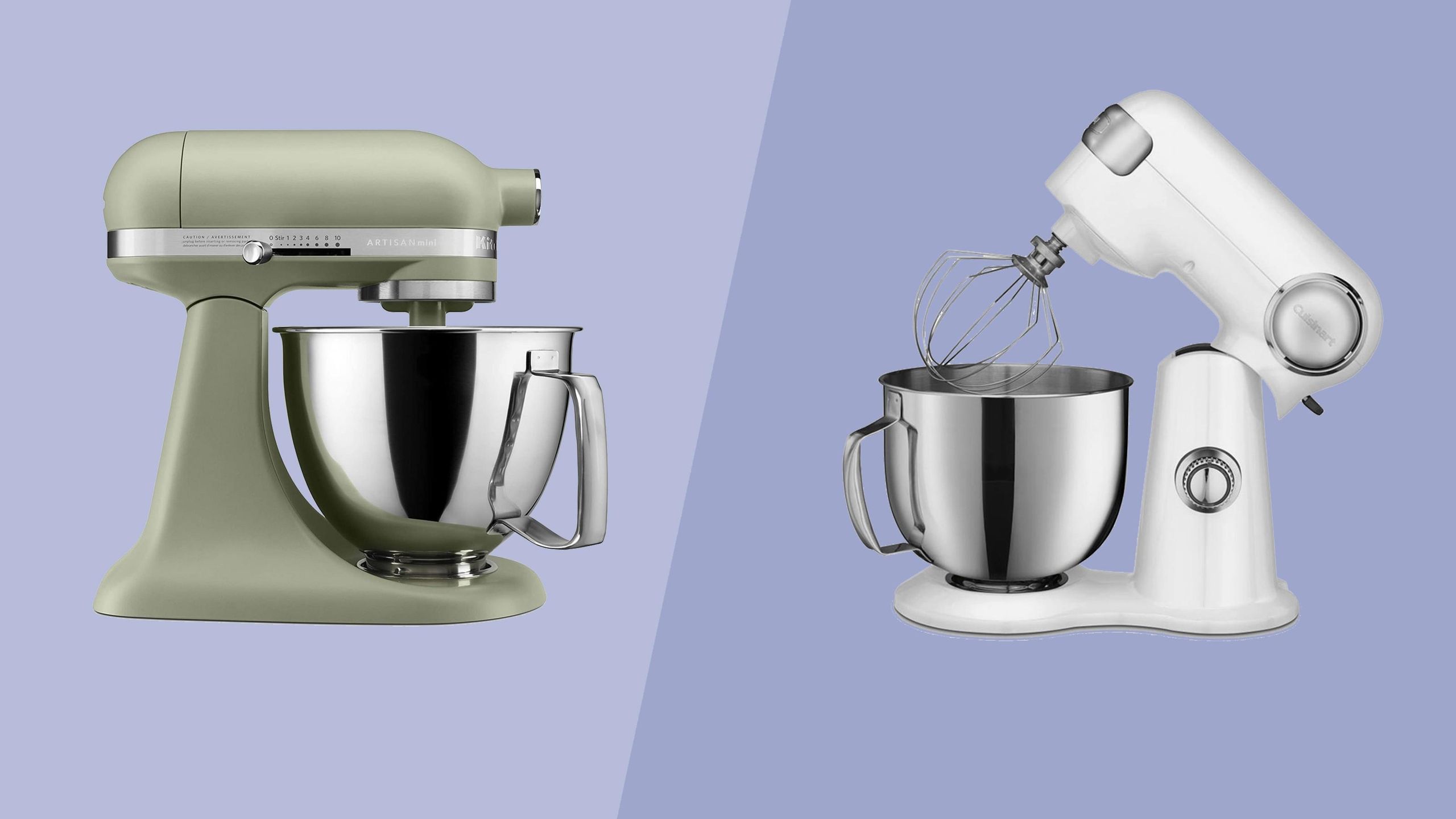
The Top 10 Stand Mixers: Ranked
Ranking stand mixers depends on individual needs. We considered performance across tasks, build quality, features, and price. This ranking is based on testing and research as of late 2025/early 2026; new models may emerge.
1. KitchenAid Artisan Series 5-Quart Stand Mixer: Still a benchmark for a reason. It’s versatile, reliable, and available in a huge range of colors. It excels at most tasks, but its geared motor can struggle with particularly heavy doughs. Best for: General baking, occasional bread making.
2. Bosch Universal Plus Stand Mixer: A powerhouse for serious bakers. Its powerful motor and large capacity make it ideal for kneading large batches of dough. It's not as aesthetically pleasing as the KitchenAid, but its performance is undeniable. Best for: Heavy bread baking, large batch cooking.
3. Cuisinart Precision Master 5.5-Quart Stand Mixer: A strong contender offering excellent value for money. It features a powerful motor and a range of speeds, making it suitable for most baking tasks. It doesn't quite match the KitchenAid or Bosch in terms of build quality, but it’s a solid performer. Best for: Beginner to intermediate bakers, those on a budget.
4. KitchenAid Professional 600 Series 6-Quart Bowl-Lift Stand Mixer: Designed for serious bakers who need extra power and capacity. The bowl-lift design provides stability when handling heavy doughs. It’s significantly more expensive than the Artisan model. Best for: Frequent bread makers, professional bakers.
5. Bosch Compact Stand Mixer MUM4405: A more affordable option from Bosch, perfect for smaller kitchens. It’s less powerful than the Universal Plus, but still capable of handling most baking tasks. Best for: Small kitchens, occasional baking.
6. KitchenAid Professional 5 Plus Series 5-Quart Bowl-Lift Stand Mixer: A step down in capacity from the 600 series, but still a capable performer with a bowl-lift design. It offers a good balance of power and size. Best for: Intermediate bakers, those who want a bowl-lift design without the full size of the 600 series.
7. Cuisinart Supreme Commercial Quality 7-Quart Stand Mixer: A large-capacity mixer designed for serious bakers and commercial use. It features a powerful motor and a durable construction. Best for: Very large batch baking, commercial kitchens.
8. Bosch MUM6N10UC Universal Kitchen Machine: Offers exceptional versatility with a wide range of available attachments. It’s a powerful and capable mixer, but can be bulky. Best for: Bakers who want a multi-functional appliance.
9. Cuisinart Stand Mixer SM-50BC 5.5-Quart: A budget-friendly option that still delivers decent performance. It’s a good choice for beginners or those who only bake occasionally. Best for: Beginner bakers, occasional use.
10. KitchenAid Heavy Duty Pro 500 Series 5-Quart Bowl-Lift Stand Mixer: A durable and powerful mixer designed for frequent use. It's a solid performer, but lacks some of the refinements of the more expensive KitchenAid models. Best for: Frequent bakers, those who need a reliable workhorse.
The 10 Best Stand Mixers for Every Home Baker

5-quart stainless steel bowl · Tilt-head design for easy access · Includes coated flat beater, dough hook, and wire whip
The KitchenAid Artisan Series is a benchmark for home bakers, offering robust performance and iconic design for consistent results.

Powerful 600-watt motor · Generous 6.5-quart stainless steel bowl · Unique bowl-drive design for efficient mixing
The Bosch Universal Plus delivers exceptional power and capacity, making it ideal for large batches and demanding tasks.

12-speed control for precision · 5.5-quart stainless steel bowl · Includes chef's whisk, flat mixing paddle, and dough hook
The Cuisinart Stand Mixer provides versatile speed options and essential attachments at a competitive price point, suitable for everyday baking.

Flex edge beater design scrapes bowl sides · Durable construction for long-lasting use · Designed for KitchenAid 6-quart bowl-lift mixers
This Roabertic Flex Edge Beater is a highly effective accessory that enhances ingredient mixing efficiency for KitchenAid bowl-lift models.
As an Amazon Associate I earn from qualifying purchases. Prices may vary.
KitchenAid: Still the King?
KitchenAid has been synonymous with stand mixers for decades. Their design and reputation for quality have made them a kitchen staple. But are they the "best’ in 2026? KitchenAid offers a wide range of models, each with strengths and weaknesses. The Artisan Series remains popular – it"s a versatile and reliable machine that handles most baking tasks with ease.
However, the Artisan’s geared motor can struggle with very heavy doughs, like those used for artisan breads. The Professional models, with their bowl-lift design and more powerful motors, address this issue, but cost more. A potential for "tilt-head wobble’ on some models can affect stability. While not universal, it"s something to be aware of.
The price is a major consideration. KitchenAid mixers are generally more expensive than comparable models from other brands. While the build quality is excellent, the increased cost isn’t always justified, especially for casual bakers. The range of colors and attachments is a plus, but these can also add to the overall expense. KitchenAid remains a top contender, but it’s no longer the only choice.
Bosch vs. KitchenAid: A Head-to-Head
The rivalry between KitchenAid and Bosch is notable in the stand mixer world. Both brands offer high-quality machines, but they take different approaches to design and performance. Bosch mixers generally prioritize power and capacity, while KitchenAid focuses on aesthetics and versatility. Here are the key differences.
Bosch mixers typically have direct drive motors, which are quieter and more efficient than KitchenAid’s geared motors. This means greater power, especially when kneading heavy doughs. They also tend to have larger bowl capacities, making them ideal for large-batch baking. However, Bosch mixers are often less visually appealing than KitchenAid models, and their attachment options aren’t as extensive.
KitchenAid excels at versatility. The wide range of attachments – from pasta makers to meat grinders – allows you to transform your mixer into a kitchen workhorse. Their design and available colors are also a major draw for many consumers. However, KitchenAid’s geared motors can struggle with heavy doughs, and their build quality isn’t always as robust as Bosch’s.
Here's a quick comparison table:
- Feature | KitchenAid | Bosch
- Motor Type | Geared | Direct Drive
- Power | 325 Watts (Artisan) – 575 Watts (Professional) | 750 Watts (Universal Plus)
- Bowl Capacity | 5-7 Quarts | 6.5-8 Quarts
- Noise Level | Moderate | Quieter
- Attachment Ecosystem | Extensive | Good
- Aesthetics | Iconic, wide range of colors | More utilitarian
- Price | Generally higher | Competitive
2026 Stand Mixer Comparison: KitchenAid, Bosch, and Cuisinart
| Model | Dough Capacity | Motor Power | Attachment Variety | Repair Availability |
|---|---|---|---|---|
| KitchenAid Artisan Series 5-Quart | Excellent | Good | Excellent | Excellent |
| Bosch Universal Plus | Excellent | Excellent | Good | Good |
| Cuisinart Precision Master 5.5-Quart | Good | Good | Fair | Fair |
| KitchenAid Professional 600 Series 6-Quart | Excellent | Excellent | Excellent | Excellent |
| Bosch Compact Stand Mixer MUM4405 | Good | Fair | Fair | Good |
| Cuisinart Supreme Commercial Quality 7-Quart | Excellent | Excellent | Good | Fair |
| KitchenAid Professional 5 Plus Series 5-Quart | Excellent | Excellent | Excellent | Excellent |
| Bosch MUM6N10UC Universal Kitchen Machine | Excellent | Excellent | Excellent | Good |
| Cuisinart Stand Mixer SM-50BC 5.5-Quart | Good | Good | Fair | Fair |
| KitchenAid Heavy Duty Pro 500 Series 5-Quart | Excellent | Excellent | Excellent | Excellent |
Illustrative comparison based on the article research brief. Verify current pricing, limits, and product details in the official docs before relying on it.
Cuisinart and the Contenders
While KitchenAid and Bosch dominate the high-end market, Cuisinart offers alternatives, particularly for budget-conscious consumers. Cuisinart mixers provide a balance of performance and affordability, making them a popular choice for beginner and intermediate bakers. They often include features like splash guards and multiple speed settings.
Other brands like Breville and Smeg also offer stylish and capable stand mixers. Breville mixers are known for their innovative features and robust construction, while Smeg mixers are prized for their retro aesthetic. However, these brands tend to be more expensive than Cuisinart, and their performance doesn’t always justify the price. Hamilton Beach offers very affordable options, but sacrifices performance and build quality.
Cuisinart's Precision Master handles a variety of tasks without breaking the bank. It’s not as powerful as the Bosch Universal Plus, but it’s capable of handling most home baking needs. Breville’s mixers, while pricey, often incorporate features like automatic speed sensing and precise control, appealing to more experienced bakers. The "best" alternative depends on your budget and priorities.
Attachments: Beyond the Beater
The true versatility of a stand mixer lies in its attachments. From pasta makers to meat grinders, attachments can transform your mixer into a multi-functional kitchen appliance. KitchenAid has the most extensive attachment options available. Bosch also offers a good selection of attachments, though not as comprehensive as KitchenAid’s.
Popular attachments include the pasta maker, which allows you to create fresh pasta from scratch; the meat grinder, for making sausages and ground meat; and the spiralizer, for creating vegetable noodles. The ice cream maker is also a popular choice, allowing you to enjoy homemade ice cream year-round. Check compatibility; not all attachments are compatible with all mixers.
The cost of attachments can add up quickly. Some attachments, like the pasta maker, can cost over $200. Consider the cost of attachments when budgeting for a stand mixer. Purchase attachments specifically designed for your mixer model to avoid compatibility issues and ensure safe operation.
Maintenance and Longevity
Proper maintenance extends the life of your stand mixer. Regular cleaning is essential – wipe down the exterior with a damp cloth and wash the bowl and attachments with warm, soapy water. Avoid immersing the mixer base in water. Lubricating the gears (on geared models like KitchenAid) is also important, typically every few years, for smooth operation.
Trou
Genuine replacement parts are often available for KitchenAid and Bosch mixers, allowing you to repair your machine rather than replacing it. However, repair costs can be significant. Investing in a high-quality mixer and performing regular maintenance will ultimately save you money in the long run. A well-maintained stand mixer can provide years of reliable service.


No comments yet. Be the first to share your thoughts!