
Quick verdict on stand mixer reviews
Choosing the right stand mixer depends entirely on what you bake most often. If you make heavy, stiff bread doughs daily, the Bosch Universal is the clear winner. Its powerful motor and unique bottom-drive design handle stiff doughs without straining or overheating, making it the most durable option for serious bakers.
For general baking tasks like whipping cream, mixing cake batter, or kneading soft cookie dough, the KitchenAid is the most versatile choice. It offers a wide range of attachments and a familiar tilt-head design that is easy to use and clean, though it can struggle with very dense mixtures.
The Ankarsrum sits between these two extremes. It is excellent for bread but operates differently, using a rotating bowl and internal roller. It is a robust tool for bread enthusiasts who want capacity and power, but it may feel less intuitive for quick, everyday mixing tasks compared to the KitchenAid.
Consumer Reports notes that these three brands consistently rank at the top for mixing performance and durability, validating them as the best stand mixer reviews options for most home kitchens [3]. Ultimately, if you bake bread weekly, choose Bosch or Ankarsrum. If you bake a variety of light goods, stick with KitchenAid.
KitchenAid, Bosch, and Ankarsrum: Stand Mixer Reviews Compared
KitchenAid models are the standard for versatility and attachments, Bosch Universal Plus mixers excel at heavy doughs without a worm gear, and Ankarsrum Original mixers use a unique bowl-and-dog design ideal for large batches.
Here is how these three contenders stack up in our stand mixer reviews regarding power, capacity, and best use cases.
| Model | Type | Motor Power | Best For | Price Range |
|---|---|---|---|---|
| KitchenAid Artisan | Tilt-Head | 325W | General baking, light doughs | $350-$450 |
| Bosch Universal Plus | Stand/Motor-Driven | 800W | Heavy bread doughs | $300-$400 |
| Ankarsrum Original | Bowl-Active | 600W | Large batches, artisan bread | $700-$800 |
KitchenAid remains the most popular choice for home bakers due to its vast ecosystem of attachments, from pasta makers to meat grinders. However, its direct-drive motor can struggle with stiff bread doughs over time. Bosch and Ankarsrum, while less versatile in attachments, offer superior torque and durability for serious bread baking. For a detailed breakdown of lab-tested performance, Consumer Reports provides extensive data on mixing consistency and durability.
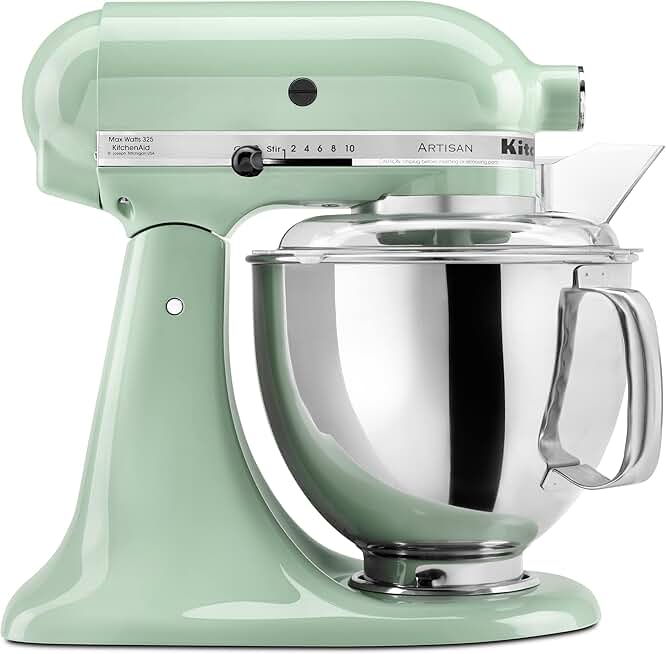
KitchenAid Artisan Stand Mixer Review
The KitchenAid Artisan remains the default choice for most home bakers, and for good reason. It is the best tilt-head stand mixer we have tested, handling everything from delicate meringues to dense pizza dough with consistent reliability. Its popularity in the stand mixer reviews landscape is driven by its versatility and the extensive ecosystem of attachments that turn it into a mini food processor.
Performance and Design
The Artisan excels at creaming butter and sugar, a foundational step for cookies and cakes. During testing, it kneaded stiff doughs with minimal effort, though it is not designed for heavy commercial-style loads. The tilt-head design allows for easy access to the bowl, making it simple to scrape down sides or add ingredients mid-mix.
Aesthetically, the Artisan is a kitchen staple. Available in dozens of colors and finishes, it functions as much as a decorative element as a tool. The 5-quart capacity is sufficient for most families, allowing you to make two loaves of bread or a double batch of cookies in one go.
Pros and Cons
While the Artisan is versatile, it has limitations. The tilt-head mechanism can feel less sturdy than a bowl-lift model when processing very stiff doughs. Additionally, the motor can strain if pushed beyond its capacity for extended periods. However, for the average home baker, these trade-offs are minor compared to its ease of use and classic look.

Variants and Attachments
KitchenAid offers a wide range of variants, from standard stainless steel bowls to glass and colored options. The true value lies in the attachments. You can purchase pasta makers, meat grinders, ice cream makers, and more, effectively replacing several single-use appliances. This expandability keeps the Artisan relevant for years, adapting to new culinary interests as they arise.


As an Amazon Associate, we may earn from qualifying purchases.
Bosch Universal: The Heavy-Duty Workhorse
If your primary goal is baking dense, heavy breads, the Bosch Universal stands apart from the KitchenAid and Ankarsrum. While other mixers rely on a traditional planetary mixing action where the beater spins around a stationary bowl, the Bosch uses a bottom-drive mechanism with a unique dual-head system. This design allows the dough hook and beater to work in tandem against the bowl walls, creating a kneading action that is far more efficient for stiff doughs.
This engineering choice makes the Bosch the superior choice for stand mixer reviews focused on bread baking. It handles large batches of bagel, pizza, and rye dough with ease, often completing the job faster than its competitors. The motor is geared specifically for torque rather than speed, meaning it rarely struggles or overheats when tackling stiff mixtures that would stall a KitchenAid’s transmission.
Home bakers often describe the Bosch as an industrial-grade tool disguised in a kitchen appliance. It is not the most visually appealing option on this list, and it lacks the sleek aesthetic of a KitchenAid, but its durability is unmatched. For serious bakers who prioritize performance over form, the Bosch’s ability to knead dough for extended periods without strain makes it the definitive choice.
Ankarsrum Review for Bread
If you bake dense, high-hydration loaves regularly, the Ankarsrum is the workhorse that serious home bakers rely on. Unlike traditional mixers that use a beater to push dough against a stationary bowl, the Ankarsrum uses a roller and scraper inside a rotating bowl. This gentle, consistent kneading action develops gluten without overheating the motor or tearing the dough structure. It is widely considered the premium choice for durability and performance in heavy-duty applications.
The 7-liter capacity allows you to mix up to 3 kg of flour in a single batch, making it ideal for large families or batch baking. The motor is designed to run for extended periods without strain, handling stiff rye and whole wheat doughs that would typically stall lighter mixers. While the learning curve for loading the dough is slightly steeper than a KitchenAid, the results are consistently superior for artisan breads.
For a detailed breakdown of how it stacks up against competitors like the Bosch and KitchenAid in real-world testing, Consumer Reports and Serious Eats provide excellent comparative data on torque and dough consistency.
How to choose your stand mixer
Choosing the right stand mixer starts with matching the machine to your actual baking habits. If you bake daily or frequently handle heavy bread doughs, you need a motor built for torque. For occasional cookie bakers, a standard tilt-head model is usually sufficient.
Match the motor to your dough
Heavy doughs like bagels or pizza crust require a direct-drive motor to prevent the mixer from walking across the counter or burning out. Consumer Reports testing shows that direct-drive models maintain consistent speed under load, whereas belt-driven units may struggle. Serious Eats notes that tilt-head mixers are excellent for lighter tasks like creaming butter but lack the raw power for stiff doughs.
Consider your counter space
Stand mixers are large appliances. Tilt-head models are generally more compact and easier to access for adding ingredients, while bowl-lift models offer more stability for heavy loads but take up more footprint. Measure your available counter space before purchasing to ensure the mixer fits comfortably without crowding your workflow.
Final decision framework
- Daily bread baker: Choose a bowl-lift model with a direct-drive motor (e.g., Bosch, Ankarsrum).
- Versatile home baker: A tilt-head model with a robust motor (e.g., KitchenAid) handles most tasks well.
- Occasional baker: A smaller, budget-friendly tilt-head mixer is sufficient for light doughs and batters.
Stand mixer reviews: durability, attachments, and maintenance
We fielded questions from home bakers who want to know if a stand mixer is a five-year appliance or a lifetime investment. The answer depends on how you use it and whether you stick to compatible attachments.
How long do stand mixers last?
A well-maintained stand mixer should last 10 to 20 years. KitchenAid and Bosch models are built with metal gearboxes that handle heavy doughs better than plastic alternatives. Anecdotal evidence from professional bakers suggests that a Bosch Universal Plus can handle a home bakery business for over five years without failing. Regular maintenance, like cleaning the gear housing, extends this lifespan significantly.
Do KitchenAid attachments fit Bosch mixers?
No, they do not. KitchenAid uses a proprietary hub system that is incompatible with Bosch and Ankarsrum mixers. Bosch has its own ecosystem of attachments, while Ankarsrum relies on its unique bowl-and-roller design. If you buy a KitchenAid, you have access to the widest range of third-party add-ons, including pasta makers and meat grinders. For Bosch or Ankarsrum users, you are limited to the manufacturer's specific accessories.
Which stand mixer is best for bread?
For heavy bread doughs, the Bosch Universal Plus and Ankarsrum are superior choices. Their bottom-driven or roller-based mechanisms prevent the motor from overheating when mixing stiff doughs. KitchenAid models can handle bread, but they are prone to "walking" across the counter and may strain the motor with large batches. If your primary goal is artisanal bread, the Bosch or Ankarsrum is the more durable option.
No comments yet. Be the first to share your thoughts!