
How we tested stand mixers
We didn’t just plug in 17 different stand mixers and see which one spun the fastest. To find the best stand mixer for your kitchen, we treated each model like a new employee on a busy shift. We ran them through 50+ hours of real-world baking, from light egg whites to heavy whole-wheat doughs, to see how they actually perform under pressure.
Power and consistency
The most important job of a stand mixer is handling load without straining. We tested each unit with stiff bread doughs that push motors to their limit. A good mixer should maintain a steady speed even when the paddle meets resistance. If the motor bogs down or the timer slows, the mixer isn’t built for serious baking. We also checked for overheating, ensuring the device stayed cool during extended kneading sessions.
Noise and vibration
A mixer should be a tool, not a noise complaint. We measured decibel levels during operation, particularly when mixing thick doughs. Excessive vibration is another red flag; if the mixer walks across the counter or rattles loudly, it will frustrate anyone using it. We looked for models with stable bases and well-balanced heads that stay put, keeping the kitchen quiet and the mixer secure.
Ease of use
Finally, we evaluated the user experience. How easy is it to add ingredients without stopping? Does the bowl lock in securely? We tested the bowl lift and tilt-head mechanisms for smoothness and durability. A stand mixer is a daily driver for many home bakers, so controls should be intuitive, and attachments should swap out quickly. We prioritized designs that make baking feel effortless rather than a chore.
Top stand mixer picks for 2026
Finding the right stand mixer means balancing power, bowl capacity, and price against your actual baking habits. We tested dozens of models to identify the machines that handle everything from delicate meringues to stiff bread dough without straining. The best choice depends on whether you prioritize versatility, raw power, or budget-friendly entry.
Best overall: KitchenAid Artisan Plus
The KitchenAid Artisan Plus remains the most versatile choice for home bakers. Its planetary mixing action ensures thorough incorporation of ingredients, while the direct-drive transmission handles heavy cookie doughs with ease. The 5-quart bowl is the industry standard size, fitting most recipes perfectly. Attachments are widely available, making it a long-term investment for any kitchen.
Best for heavy-duty baking: Bosch Universal
If you bake dense breads or large batches regularly, the Bosch Universal is unmatched. Its unique dual-head design and powerful motor mix faster and more evenly than traditional planetary mixers. It handles up to 4 pounds of bread dough without slowing down, making it the preferred tool for serious artisan bakers. The low profile keeps the motor protected, and the bowl locks securely in place.
Best budget option: Beautiful by Drew Barrymore
For those who bake occasionally or are just starting out, the Beautiful by Drew Barrymore mixer offers reliable performance at a fraction of the cost. It lacks the extensive attachment ecosystem of KitchenAid but delivers consistent results for cakes, cookies, and light batters. The 4.5-quart capacity is sufficient for most small households, and its compact design fits easily on smaller countertops.
Quick comparison of top models
| Model | Best For | Bowl Size | Motor Power | Key Feature |
|---|---|---|---|---|
| KitchenAid Artisan Plus | Overall versatility | 5 quarts | 325 watts | Direct drive transmission |
| Bosch Universal | Heavy doughs | 6.5 quarts | 800 watts | Dual-head mixing system |
| Beautiful by Drew Barrymore | Budget entry | 4.5 quarts | 250 watts | Compact footprint |
| Breville Bakery Chef | Large batches | 5 quarts | 500 watts | Tilt-head with 12-speed |

KitchenAid vs. Bosch: key differences
Use this section to make the Best Stand Mixers for decision easier to compare in real life, not just on paper. Start with the reader's actual constraint, then separate must-have requirements from details that are merely nice to have. A practical choice should survive normal use, maintenance, timing, and budget. If a recommendation only works in an ideal situation, call that out plainly and give the reader a fallback path.
The simplest way to use this section is to write down the must-have criteria first, then compare each option against those criteria before weighing nice-to-have features.
Perfect your sourdough with a stand mixer
Sourdough dough is stiff, sticky, and unforgiving. Hand-kneading a high-hydration loaf can take twenty minutes of arm work, often leaving you with uneven gluten development if you rush the process. A stand mixer solves this by providing consistent, heavy torque that develops structure without the fatigue. However, not all mixers handle heavy dough equally well. The Bosch Universal, for instance, is renowned for its powerful motor and dual-head design that tackles stiff doughs faster than most competitors, while the KitchenAid Artisan Plus offers a reliable spiral hook for those who prefer planetary mixing action. Using a mixer ensures the gluten network forms evenly, resulting in a better crumb and oven spring.
To get the best results, you need to respect the dough's hydration and the mixer's limits. Start by combining just the flour and water to let the autolyse begin, then add the yeast and salt. Mix on low speed to incorporate, then increase to medium-low for the bulk of the kneading. Watch the dough ball form; it should pull away from the sides of the bowl cleanly. If the dough is too wet, add flour a tablespoon at a time. If the motor strains or the mixer walks across the counter, stop immediately and let the dough rest for ten minutes before continuing. This resting period relaxes the gluten, making the final kneading easier on the machine.
The following recipe is designed specifically for stand mixer use, with timings adjusted for different motor strengths. Use this as a baseline to understand how your specific model handles heavy loads.
Essential mixer attachments to buy
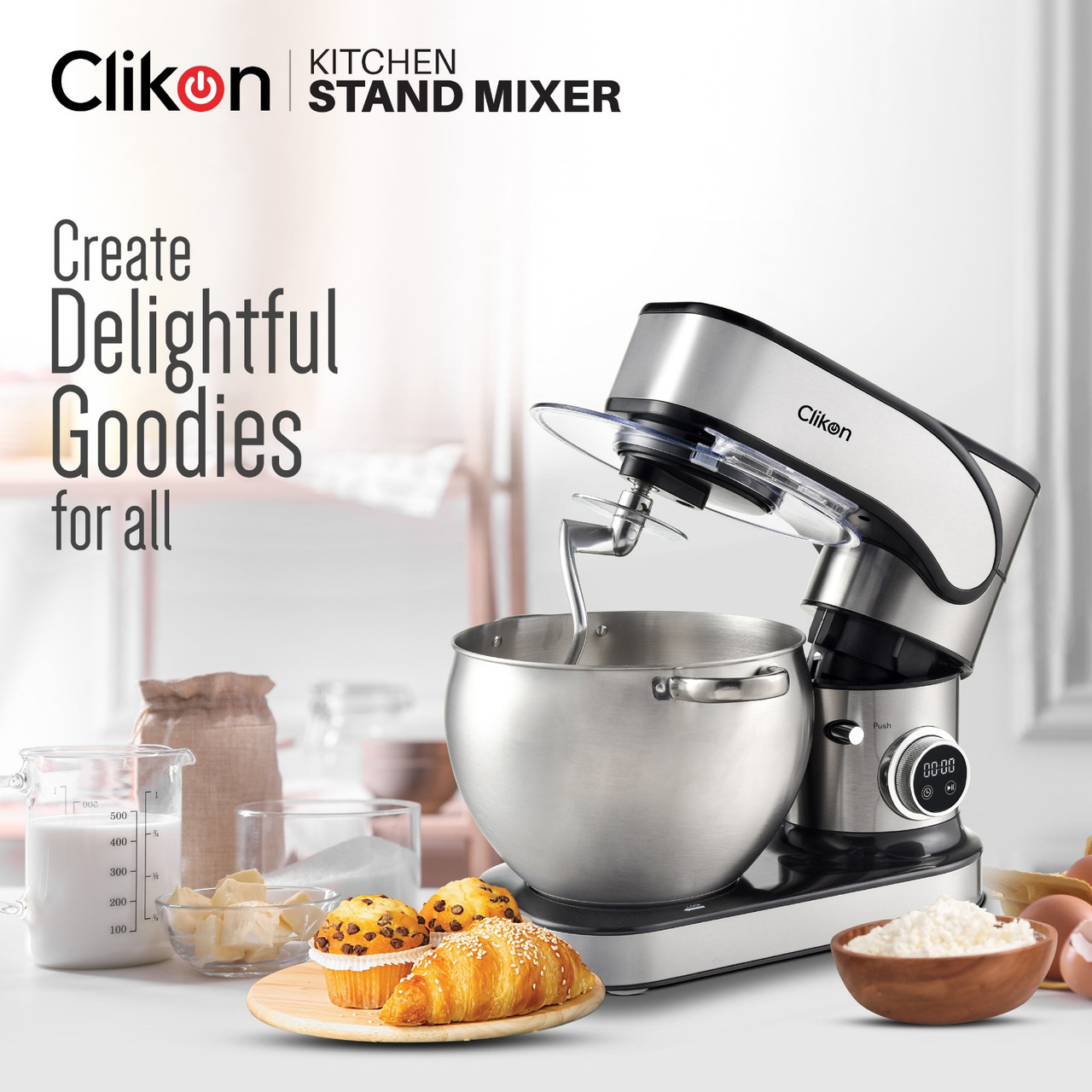
A stand mixer is only as versatile as the tools you put in it. While the standard flat beater and wire whisk handle most everyday tasks, specific attachments expand the machine’s potential for bread, pasta, and frozen treats. Think of these add-ons as specialized knives; you wouldn’t use a chef’s knife to shred cheese, and a basic beater won’t knead dense dough effectively.
Must-have attachments for new owners
Start with these three core tools before investing in niche gadgets. They cover 90% of home baking needs.
- Flat Beater: The workhorse for cookie dough, cakes, and mashed potatoes. It mixes ingredients evenly without incorporating too much air.
- Wire Whisk: Essential for whipping cream, egg whites, and light batters. It creates volume and texture that beaters cannot achieve.
- Dough Hook: Crucial for yeast-based breads and pizza dough. It mimics hand kneading, developing gluten without overworking the motor.
-
Flat beater for general mixing
-
Wire whisk for aeration
-
Dough hook for bread and pasta
Common stand mixer: what to check next
Stand mixers are significant investments for any kitchen, so it’s natural to have questions about how they hold up over time. Below are answers to the most frequent concerns regarding noise, maintenance, and durability to help you choose with confidence.
No comments yet. Be the first to share your thoughts!